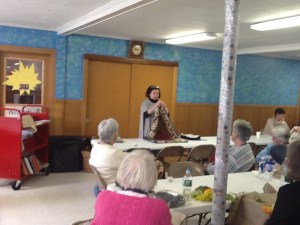
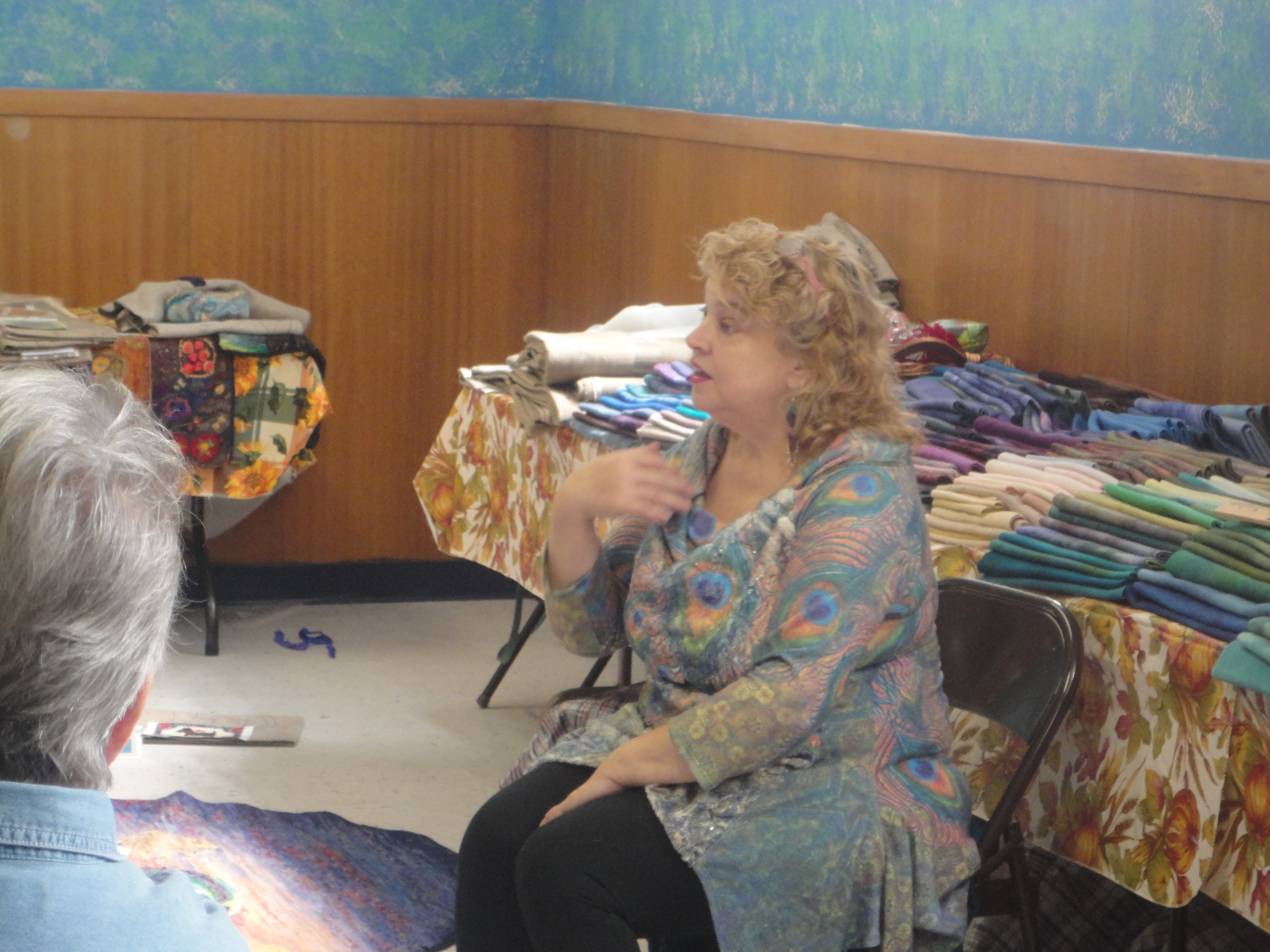
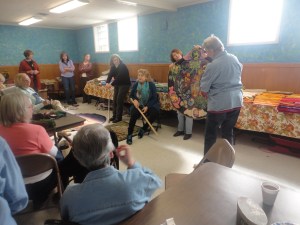
These attending the Oct. 13th meeting of the Tin Pedlar of Maine were treated to an engaging presentation by Casey Ryder, owner of PortFiber, 50 Cove St, Portland, ME 04101, on Cashmere People Yarns.
Casey shared how she became involved in this Cashmere People Yarns, a 4-year development project funded by IFAD (International Fund for Agricultural Development). The project’s objective was to create opportunities for rural women in remote areas of Tajikistan and Afghanistan for earning income. The project’s aim was to help co-operatives of women in processing local fibers from Cashgora goats into high quality yarns and linking to the global marketplace for sale of the fiber. Cashgora goats are a cross breed between angora goats (mohair) and cashmere producing goats. The Cashgora goats are raised in Tajikistan and Afghanistan. The harvested fiber is washed in Afghanistan, dying and handspinning of the yarn is done by the co-operatives of women in Tajikistan. Cashmere People Yarns are produced in a socially responsible and environmentally sustainable way. The artisans are earning a fair wage and are fully in charge of their business.
Casey shared photos of her March 2017 trip to Tajikistan to meet the groups of women spinning the yarn and learning more about the program first hand. She did not make it to Afghanistan because of weather. She explained how the Tajikistan groups were structured in 2 different parts of the country. How they meet and worked in the group leader’s home until workshops were constructed. How they went from using sheared fibers to hand combed fibers to increase the quality. She provided some history on the strain og goats that provide this incredibly soft high quality fiber. Casey shared her experiences visiting homes and workshops. She shared her experience of the language barrier (English vs Russian), rural travel, and very different culture. Casey shared stories about Skyping with these groups of women as part of their collaboration on marketing their yarn. About how this project has not only provided a source of income for these women, but also an opportunity to gather as women in a social group.
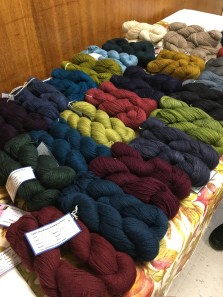
Each skein of Cashmere People Yarn provides a small bio card on the woman that spin that skein. Casey shared how she is also sharing information on how the yarn is being used by US knitters with the co-operatives. 
Imagine hearing and seeing how a handspun yarn you were responsible for creating has been knit into a beautiful scarf… By seeing the individual who did the knitting and wears the finished item…
Visit the Cashmere People Yarn site to get a complete picture of the project, journey of the fiber and the women of the co-operatives. You can also shop online for this yarn from both the link on the site or if in the Portland, Maine area visit PortFiber. You can also watch this short documentary to learn more about the history of the area, people, culture and this project.
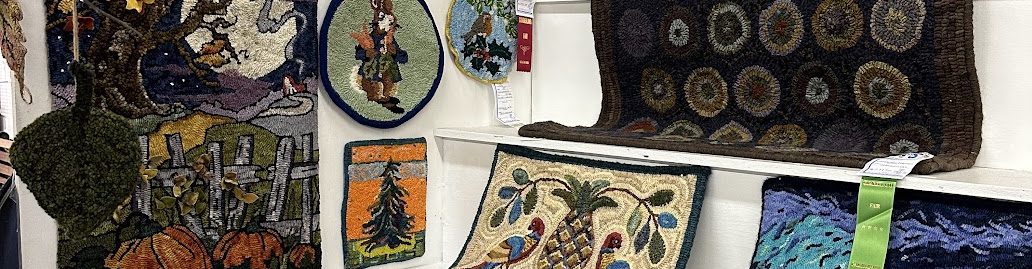
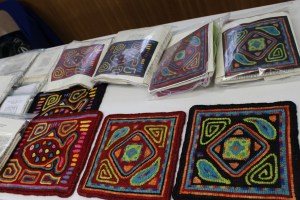
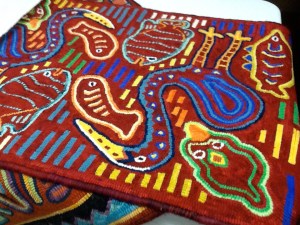
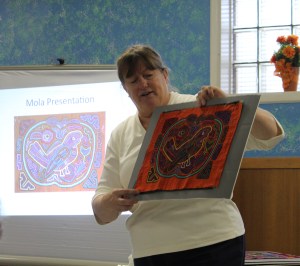
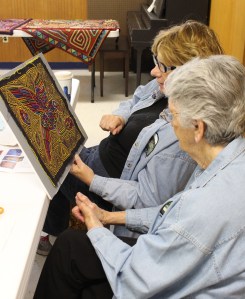
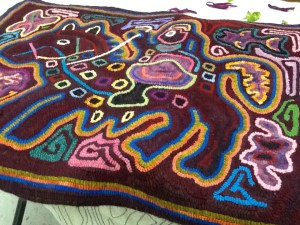
Casey also shared some of the other fiber art pieces she purchased during her visit, and the handmade socks she received as gifts during her visit.


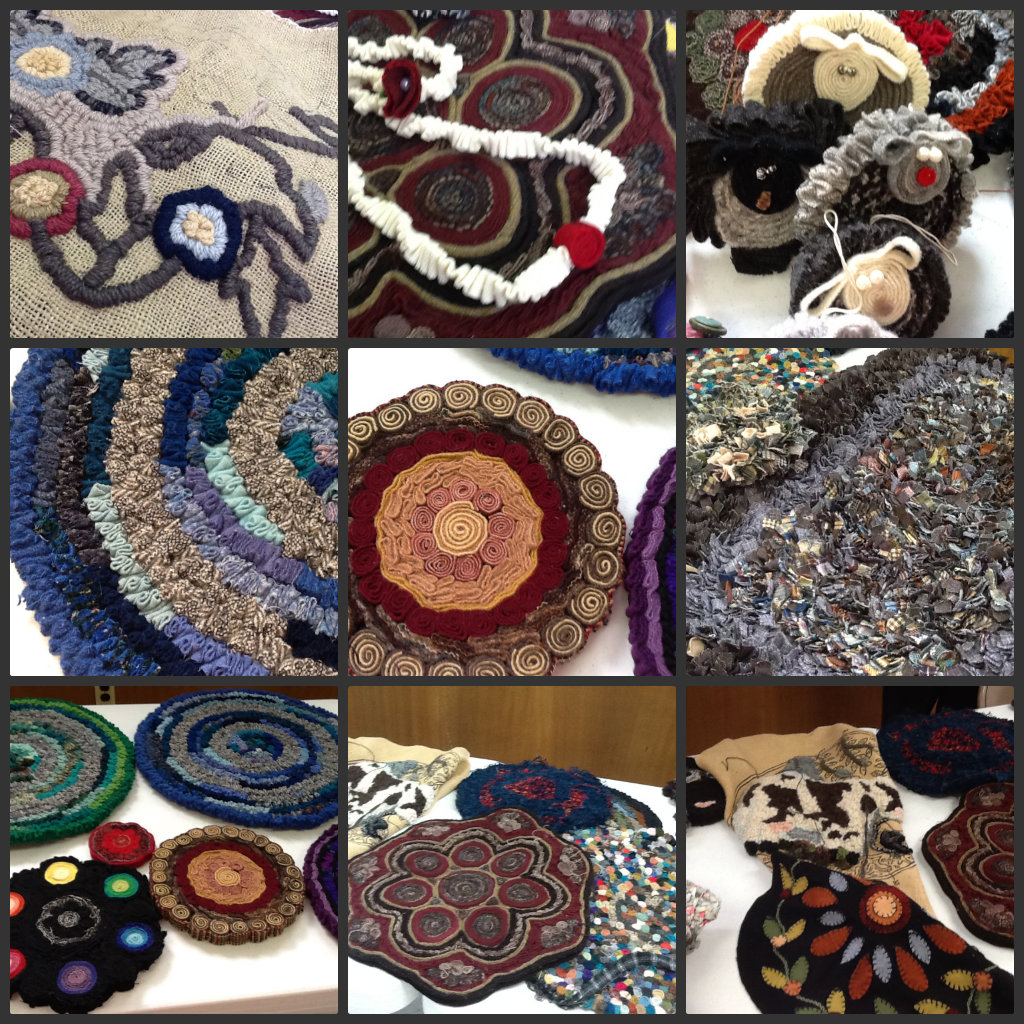
We are a group of rug hookers, many of whom do a variety of fiber arts, and it’s always fun to see the work of others.
—————————-
You can also connect to PortFiber and Cashmere People Yarns on Instagram and Facebook @PortFiber and @cashmerepeopleyarns.
 Jon started rug hooking because he was looking for a hobby. His wife suggested a visit to an area shop. When Jon
  Start by being aware of the light source direction as that provides your shadows. Shadows go from darker color to lighter to provide depth.
 ooking fur think about direction fur going on the animal you are hooking. Hook in that direction. Our eyes pick up ditches in the hooking. Hook in the direction that you would pet that animal body part.
 In cats eyes when the light shines on them the pupil constricts to a vertical streak/line.
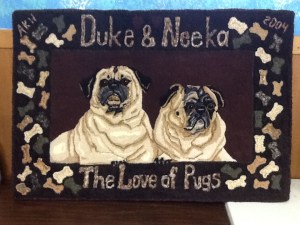 Not all eyes will be whole. It will depend on the head position and direction the creature is looking. It will also matter on where the eyes are naturally set on the head – front or side – prey will be on the side (squirrel).

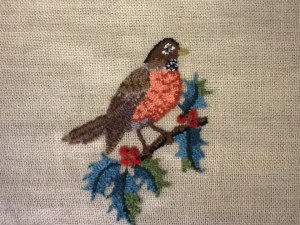

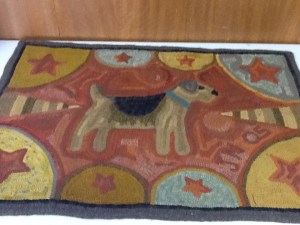
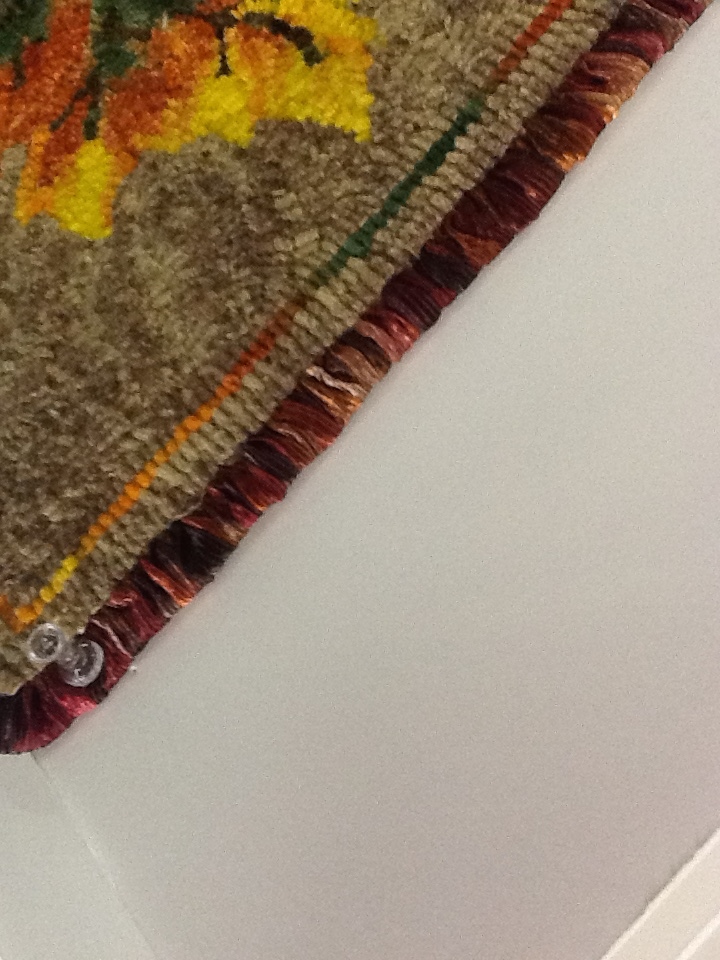
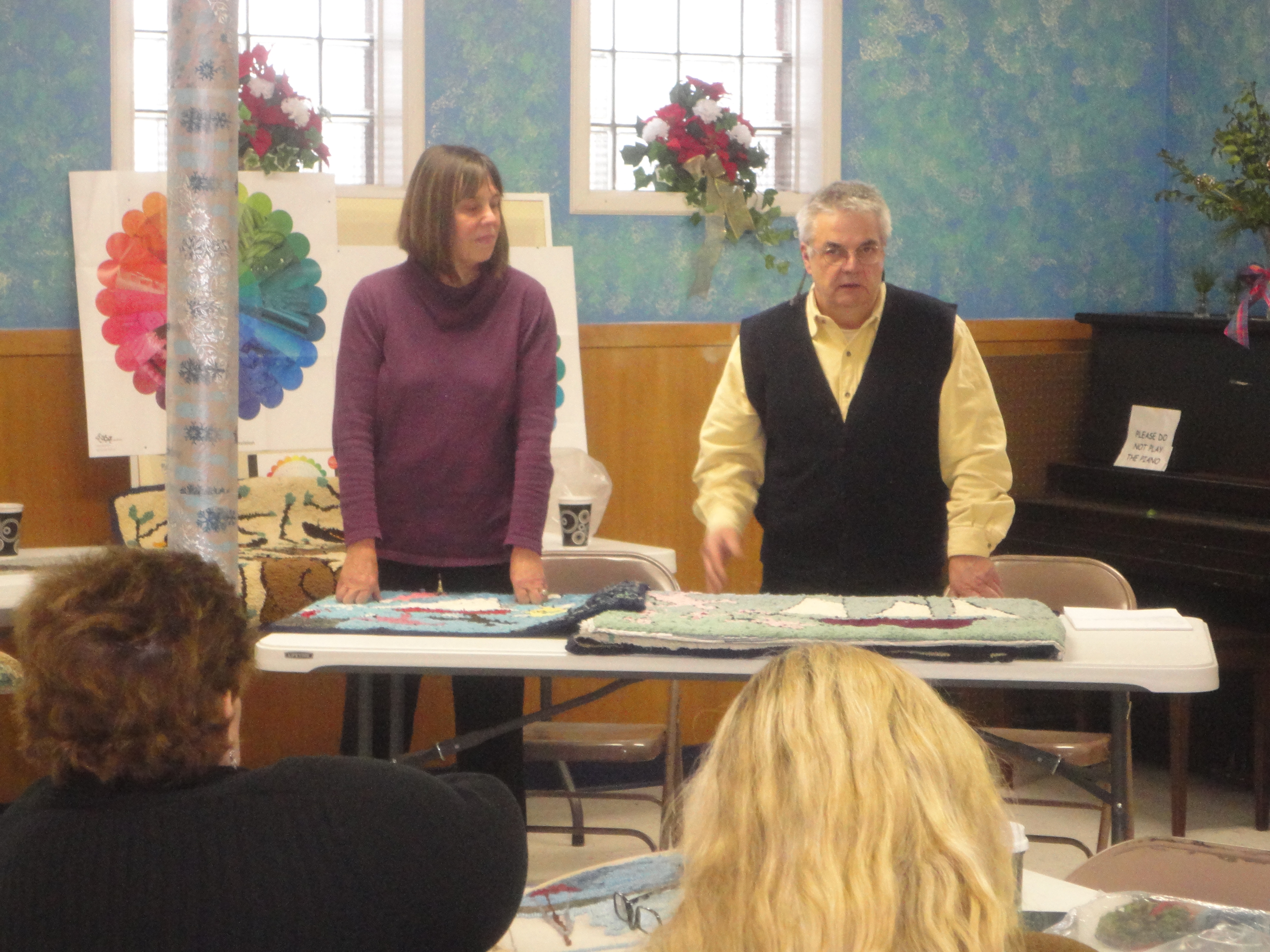
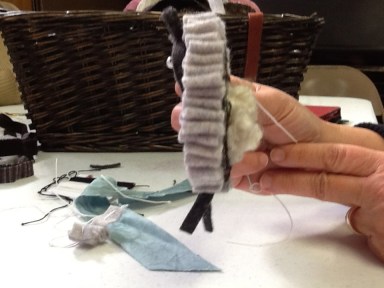
 Beverly joined us in April 2014 to demonstrate different finishing techniques that she has used over the years to finish hooked pieces.
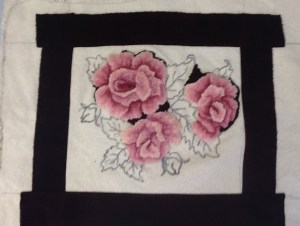 using a binding start by pre-sewing the binding at what will be the finished edged of your hooked piece. This allows you to hook right up to the binding.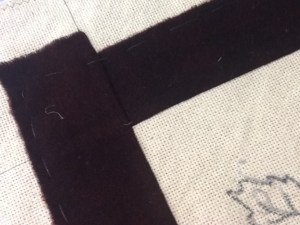
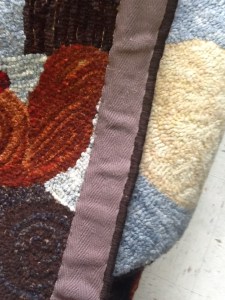
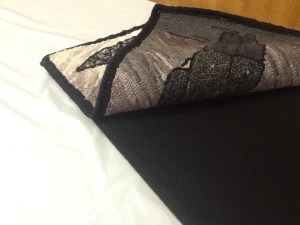 Start by taking your finished rug to the store with you to get the correct sized frame pieces.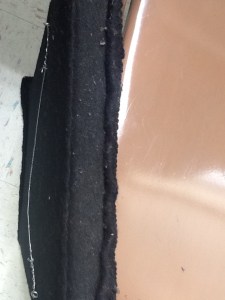
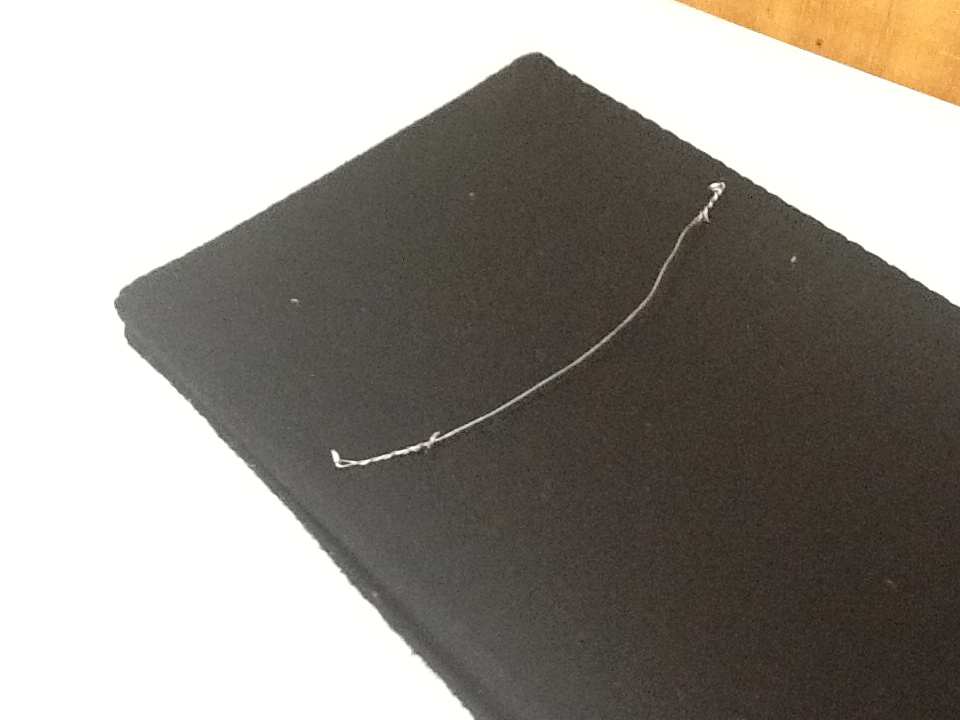
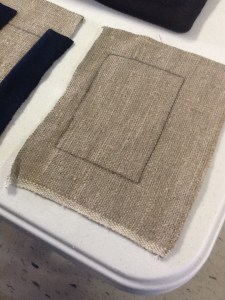 For a pillow with a wool border get it in place before you start hooking the pillow top.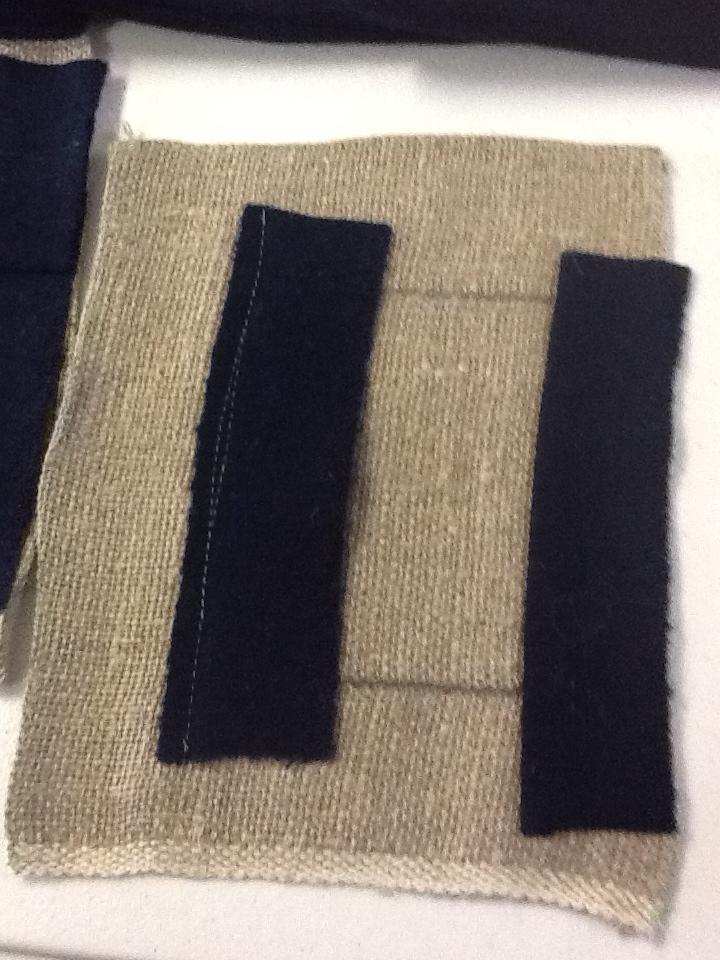
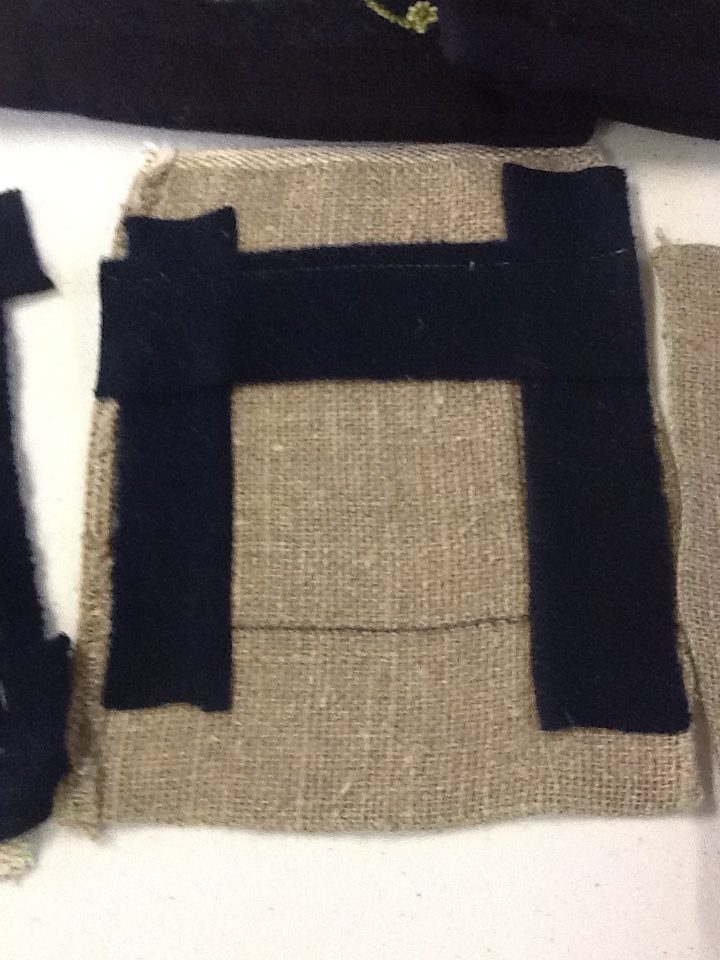
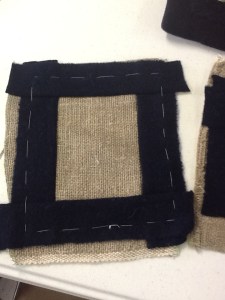

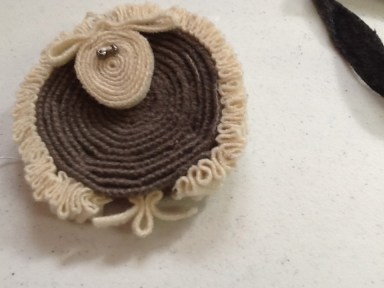
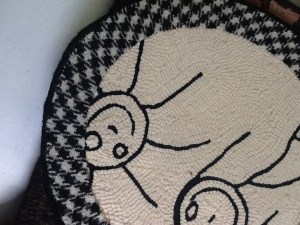 Finishing round pieces has different issues.
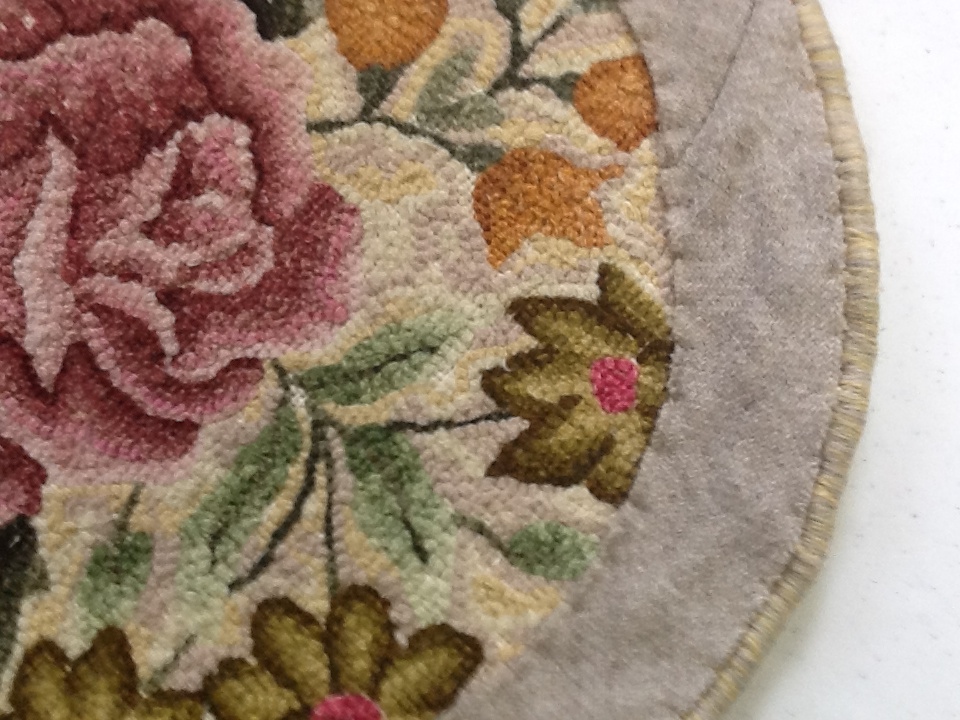
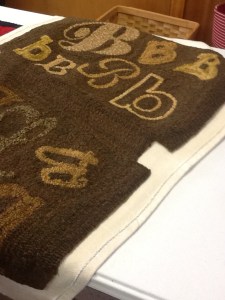 This unfinished Tote bag. The foundation has a sown edge and will be sown together to form the purse/tote. There is no binding.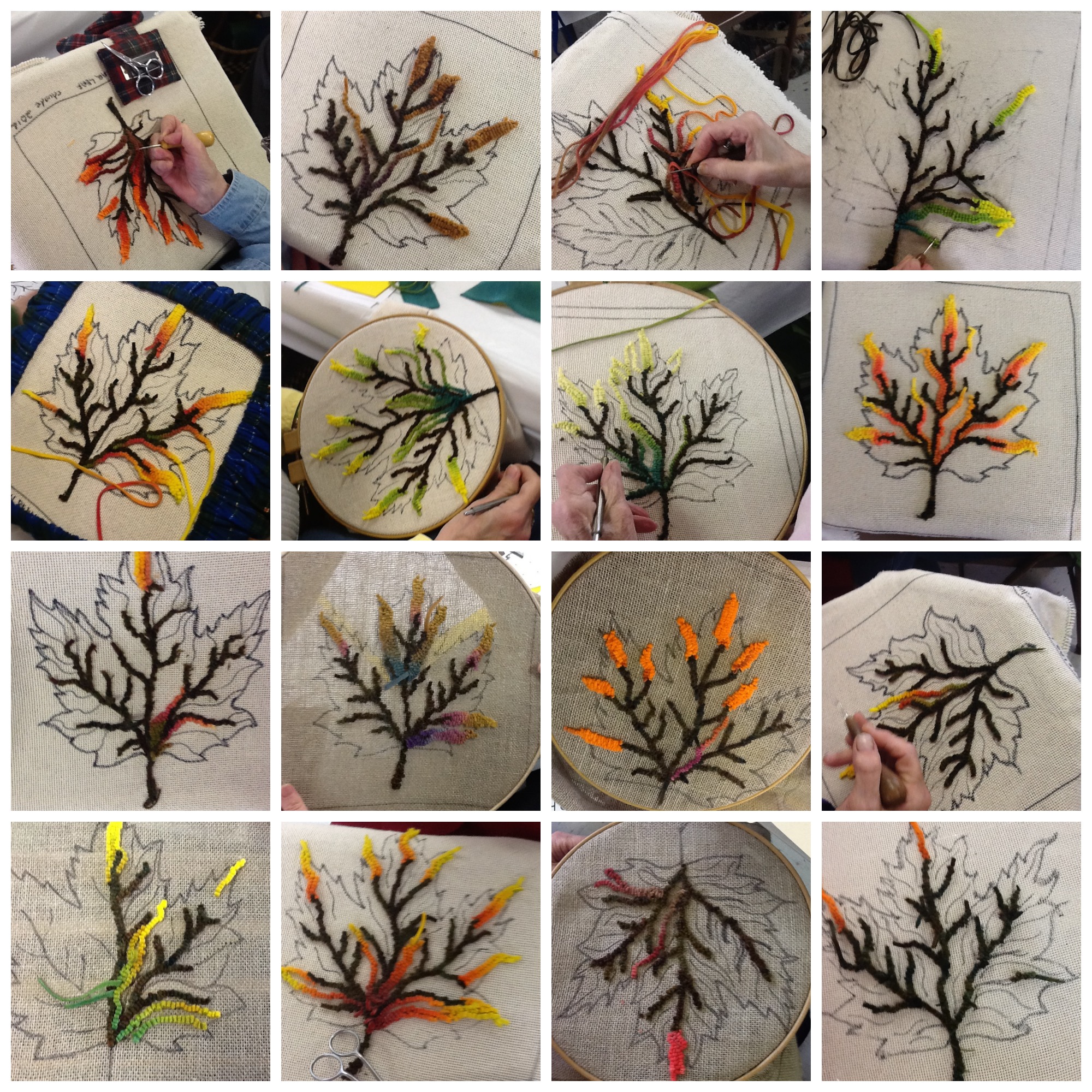
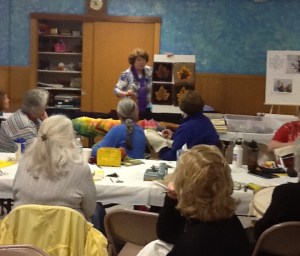 It was a wonderful workshop with clear information, helpful tips and a teacher willing to help and allow time for members to work each step. Members were definitely busy hooking away. We seemed to have a much larger group still hooking after the noon pot luck than usual.
 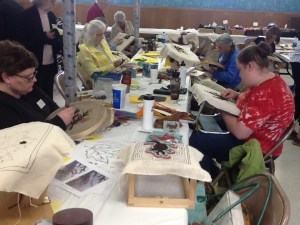 (just one of 3 table areas)
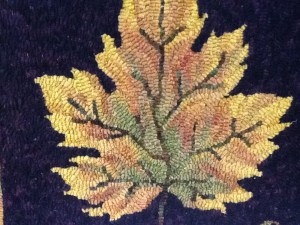
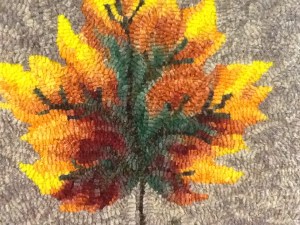
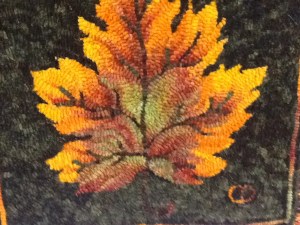
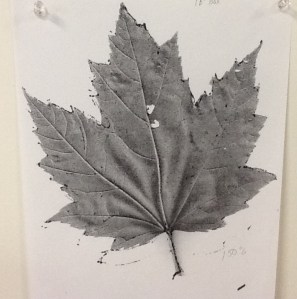 Using a real leaf, Cindy designed a special leaf pattern for use at this workshop. The pattern was copied onto foundation of choice. Red dot is great for that.
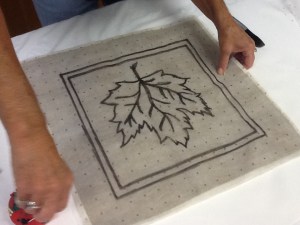 These who participated in the workshop got an informational folder with such items as the pattern and photos showing progression/steps
 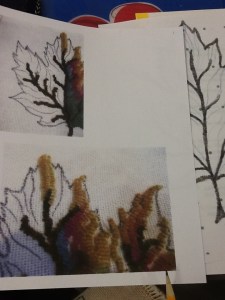 and casserole dyed wool.
  It was fun to see what members chose for their pieces. Wool was cut #4
 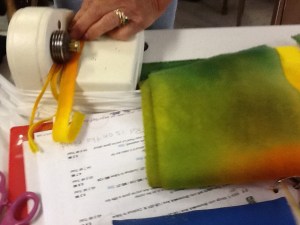 , then carefully placed in order. Tip: use folder with masking tape to maintain the cutting order.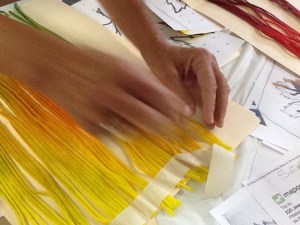
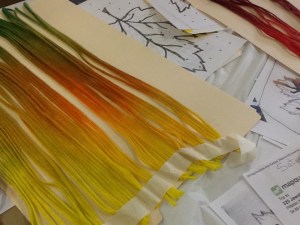 Tape over ends or loop the tape so a sticky side is up to just lay cut strips on.
 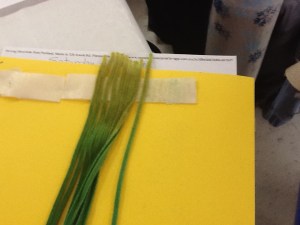 One side can be used to organize the cut off pieces.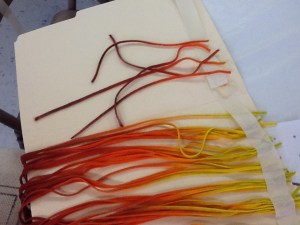
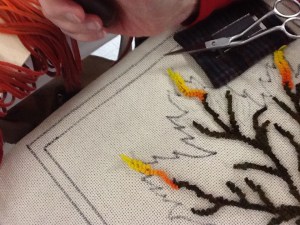 Once have these main points hooked in, time to start work on center. First draw in additional curve lines into design for guidance. Start at base (vein) with opposite color end than points (dark here since points light) and hook the strip out.
 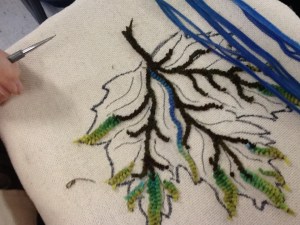 (Can see the dark blue in the center along vein. Hooked all the way to a minor point.)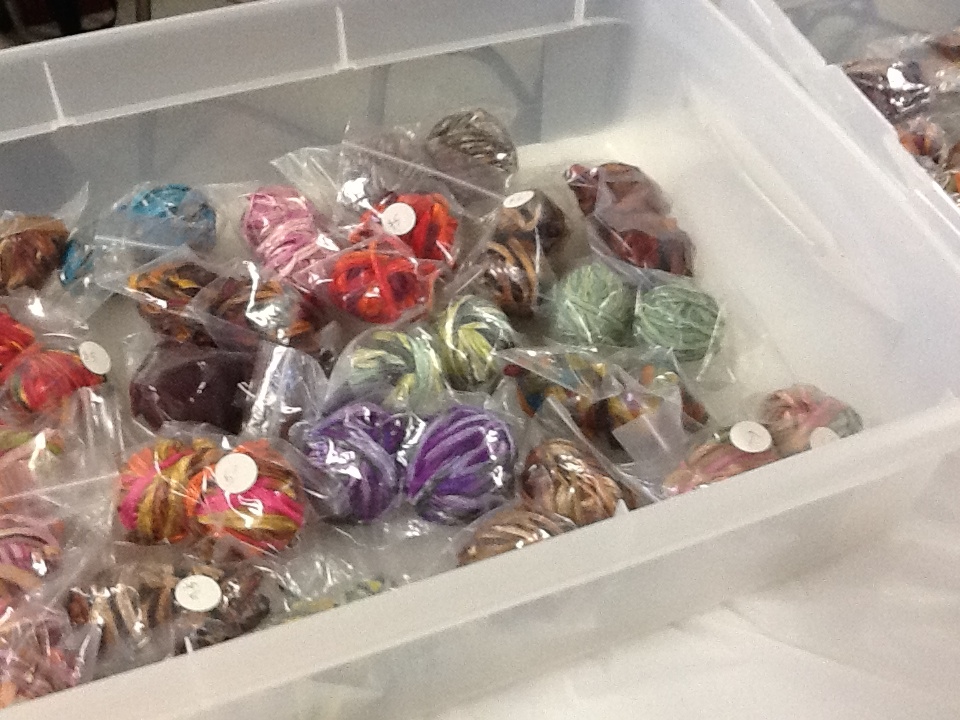
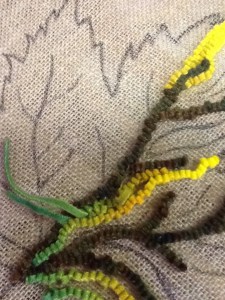 (I would also be checking those cut off sections to match up colors, as I’m a use every piece type of rug hooker.)
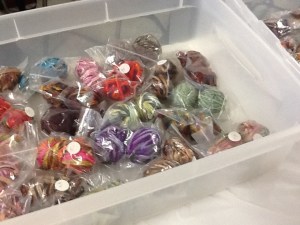 Tip: to sample the look the ribbon will give once whipped, wrap some around a pencil and check against your background fabric.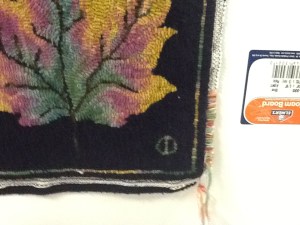

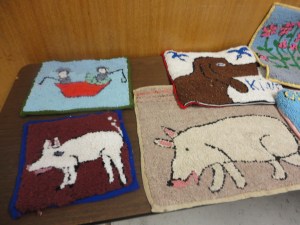

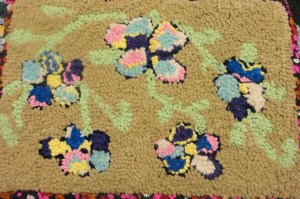

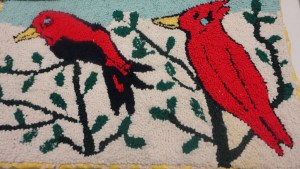

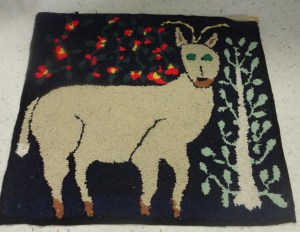
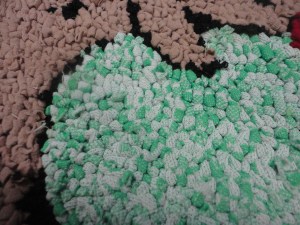
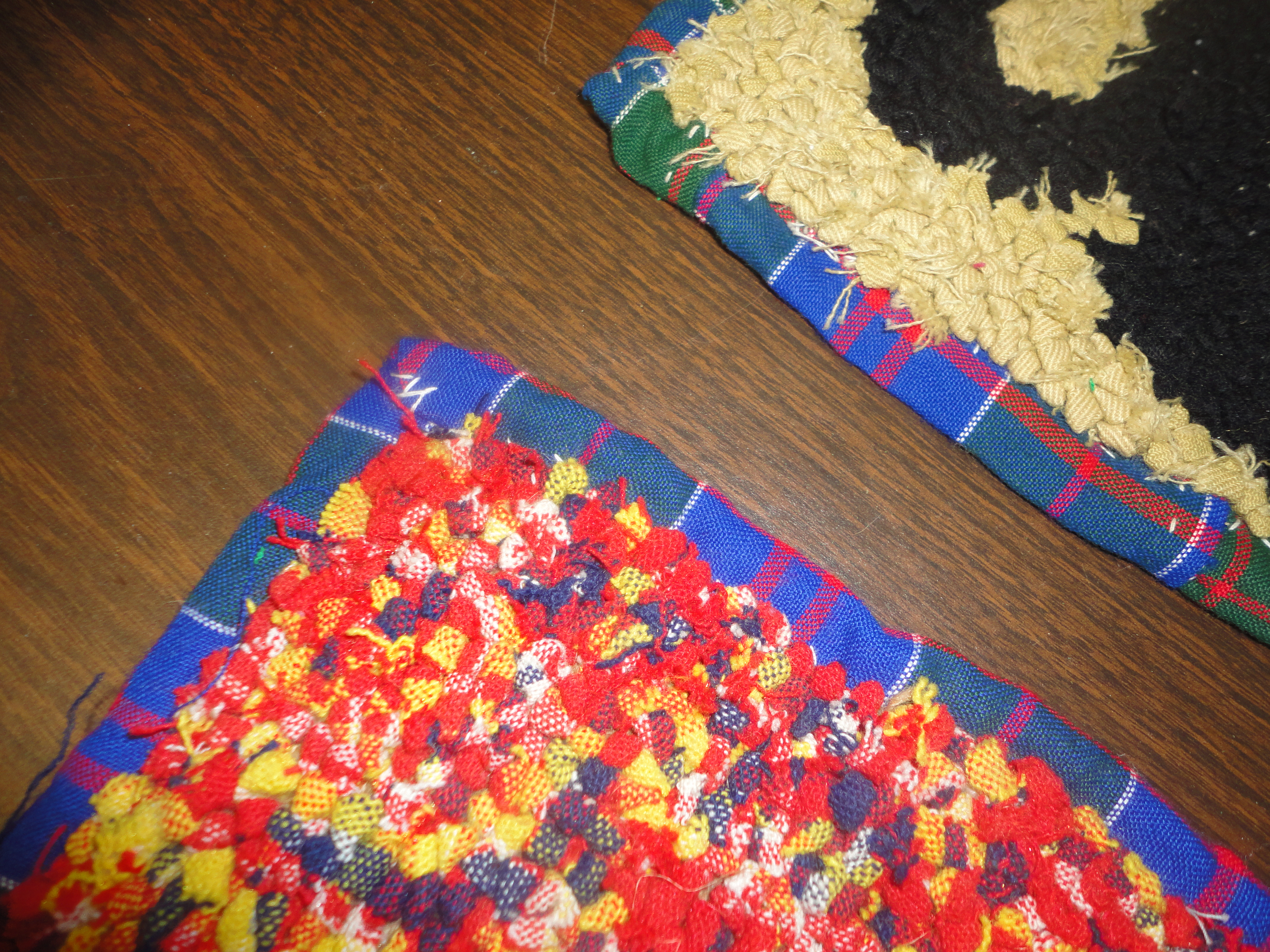
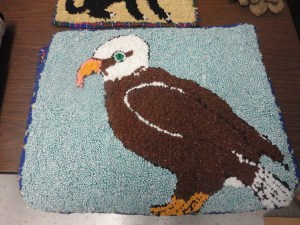
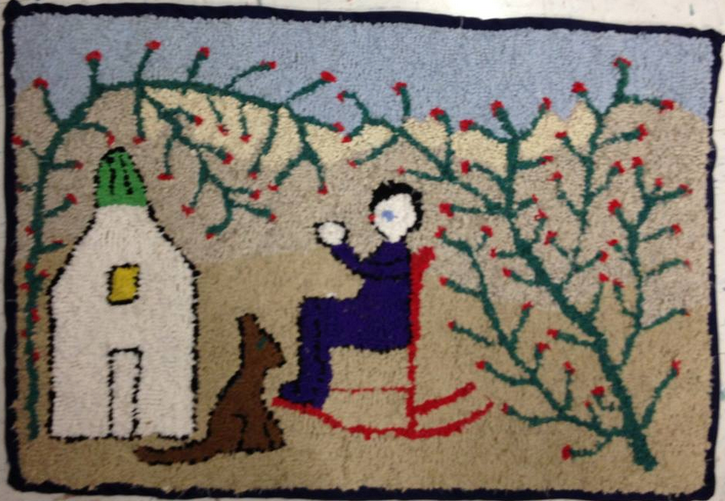
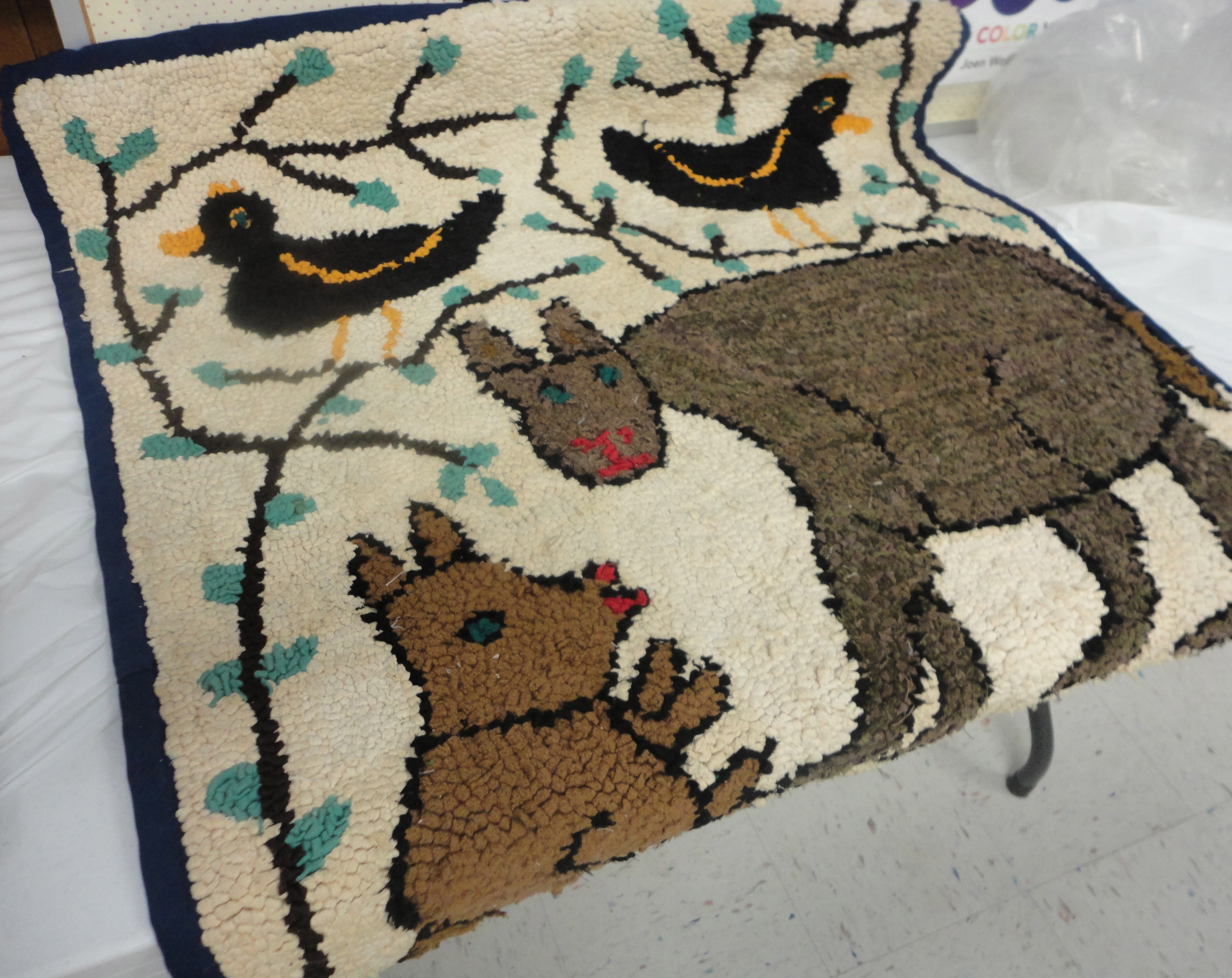
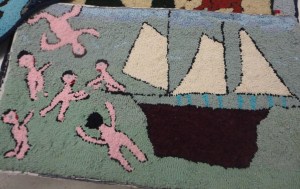
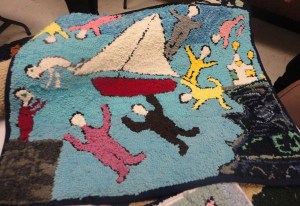
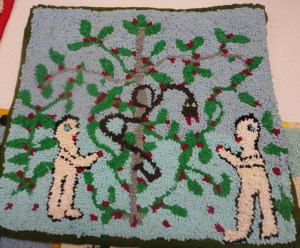
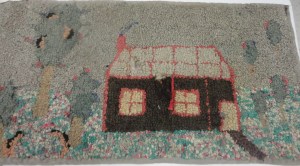 John recalls this rug as being inside the door of Ellen’s home. The family used their rugs throughout the house, but also hooked over the winters to have rugs to trade for linoleum mats/rugs. Interesting how they saw more value in the linoleum than their hand-made pieces.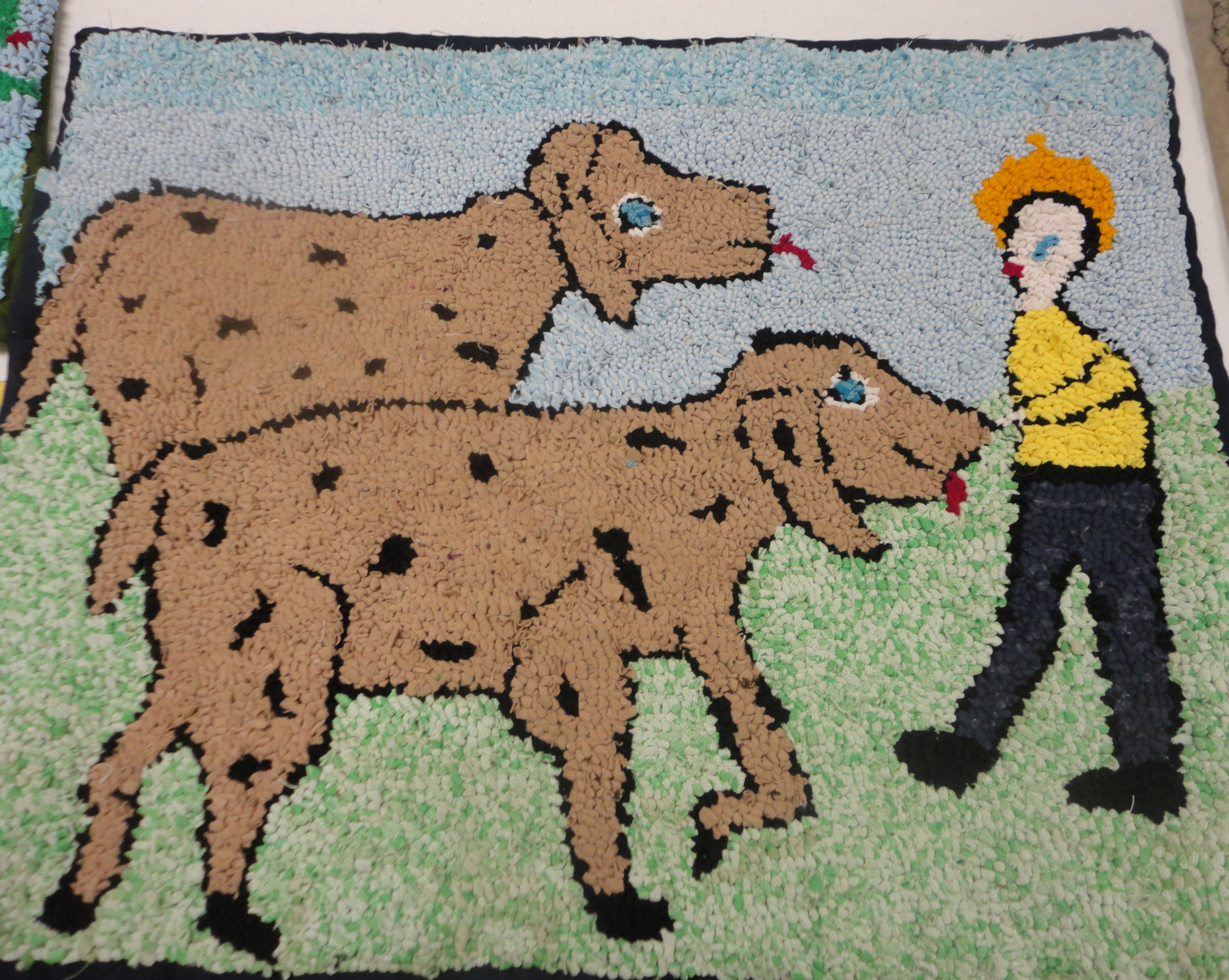
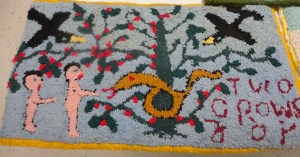
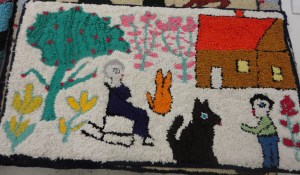
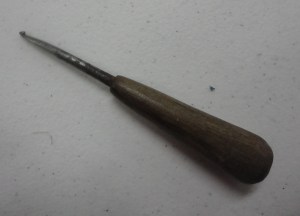 I got to try one of her hooks with aged metal shaft and well-worn wooden handle. Hooking a #8 strip it worked just fine. Ellen also knit (find some gloves knit for John in a photo above – clue look for the cat and eagle). In talking with John afterwards about Ellen’s creativity he told me she had crocheted her own wedding gown. She truly sounded like an interesting and many talented lady.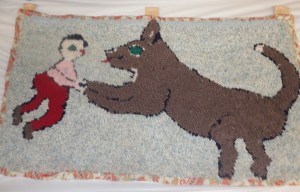

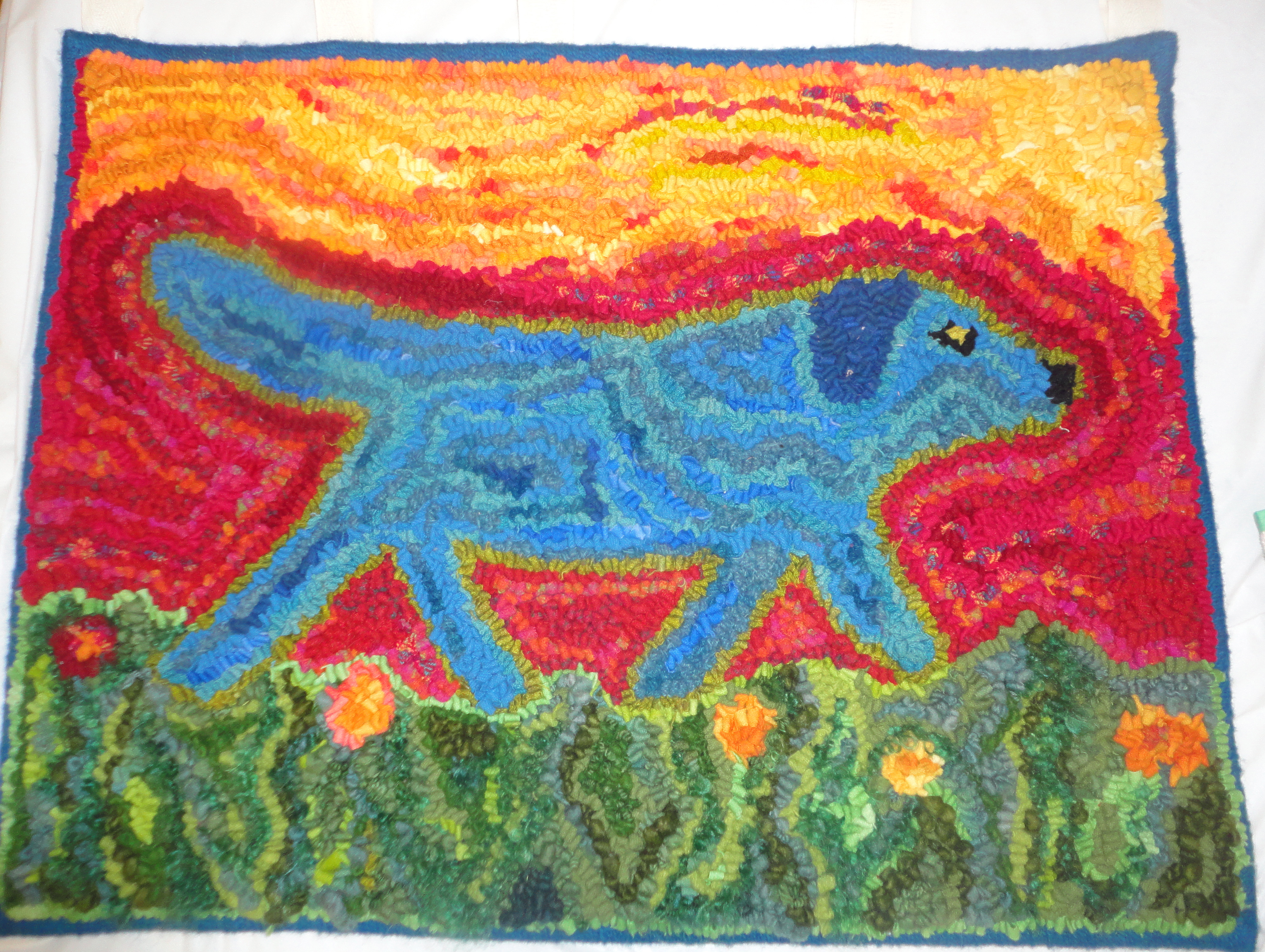


 Mouths often have a white part to them.



 Tin Pedlar of Maine