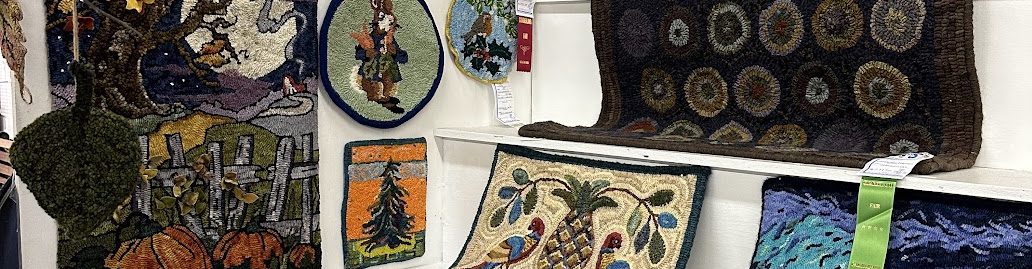

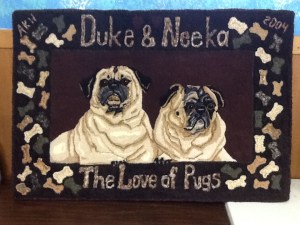
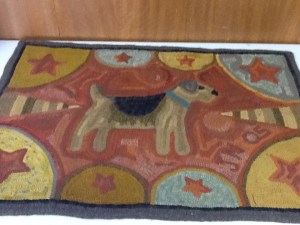
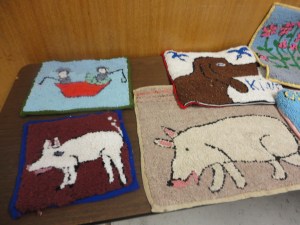
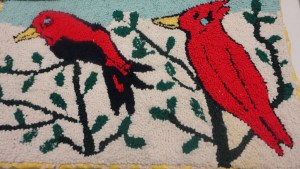
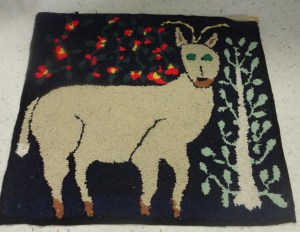
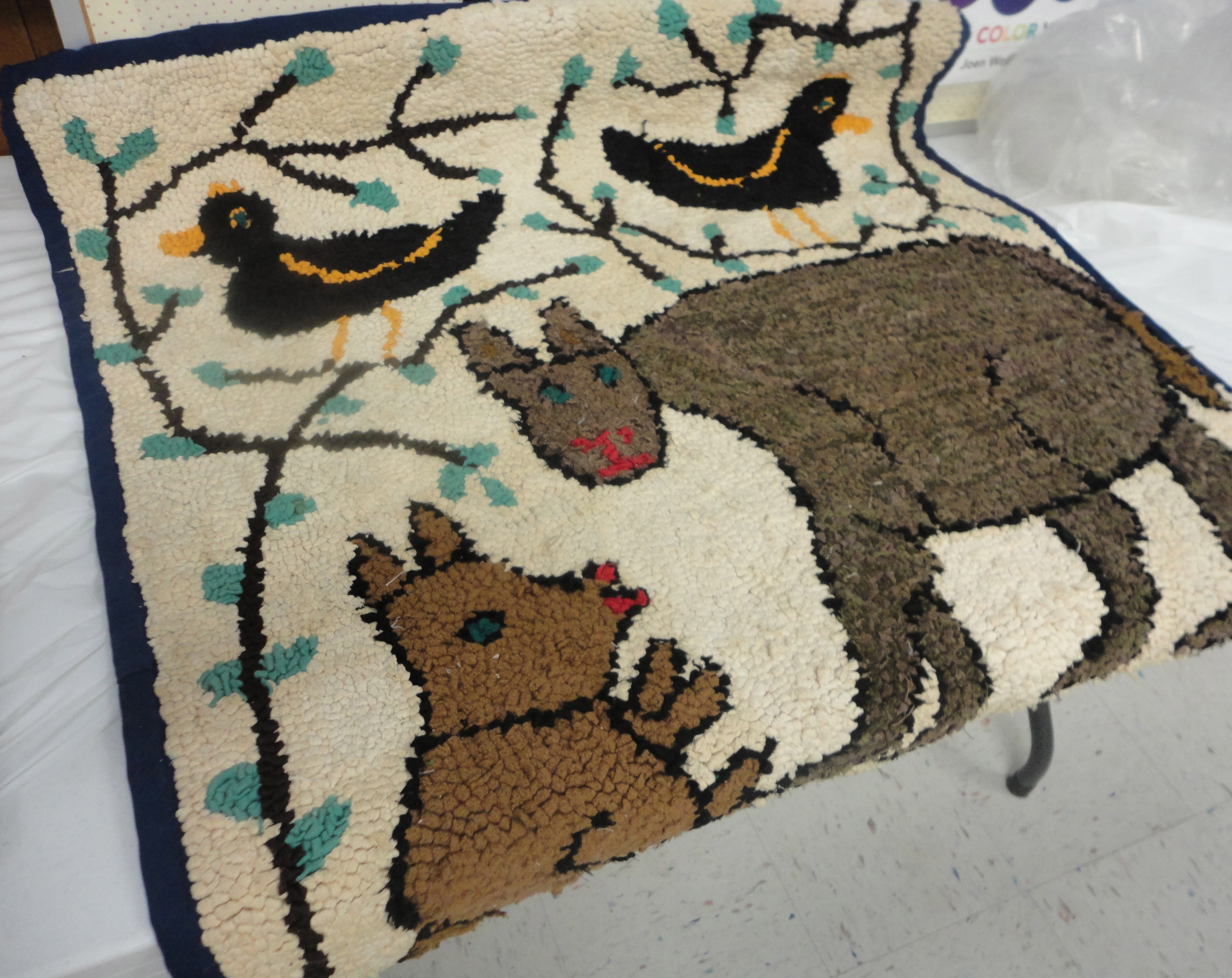
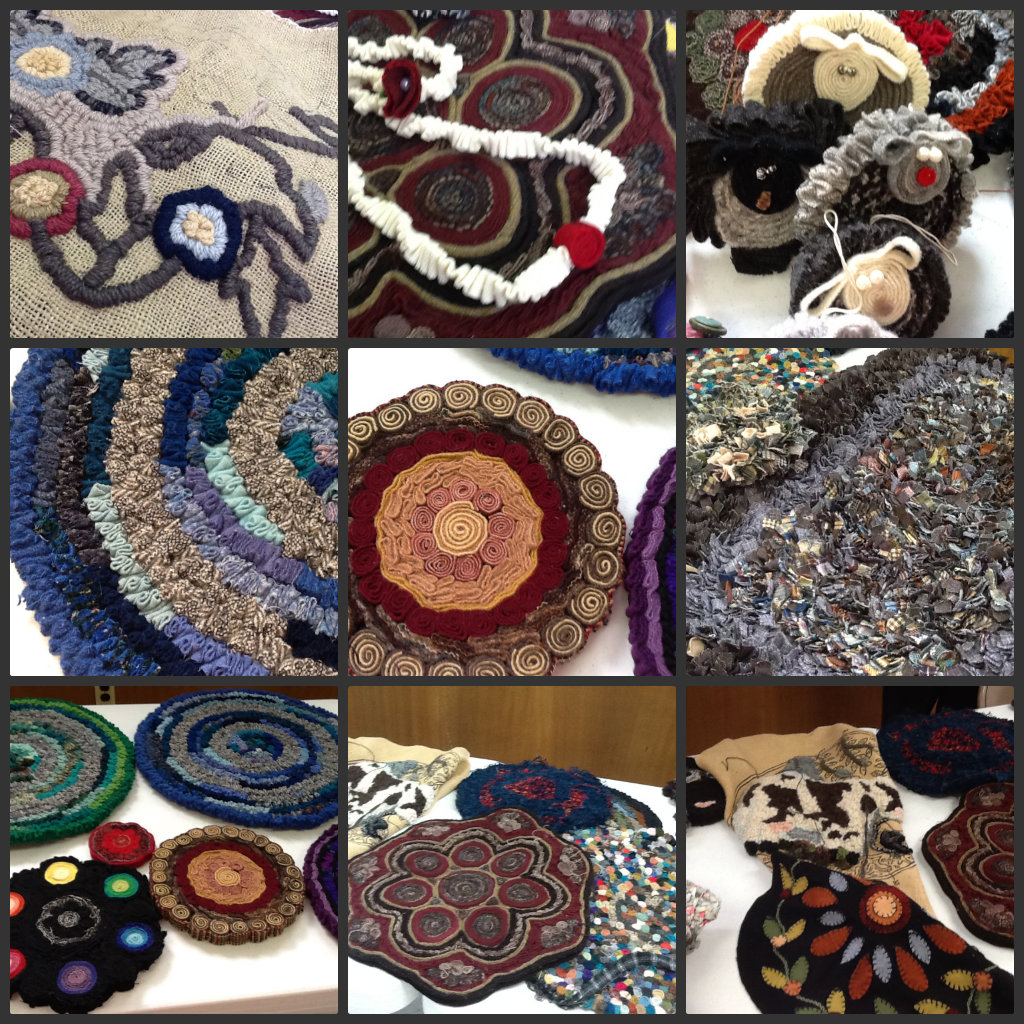
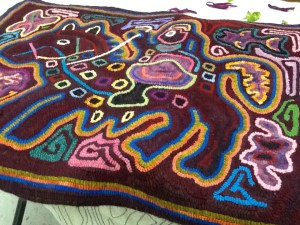
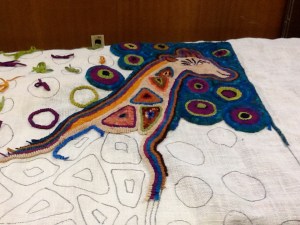
Jon’s presentation in Feb. 2014 was to walk us thru the process of creating great shading and dimension in our fur or feather rugs. As a side bar members were encouraged to bring in any rugs they had hooked with fur or feathers. (Some of those rugs are pictured within this posting.)
 Jon started rug hooking because he was looking for a hobby. His wife suggested a visit to an area shop. When Jon visited and was told one could learn to hook in five minutes, he bought a kit and started. Jon is what many of us would call “self-taught”. After about 4 years he took his first class. At the class it was suggested that he begin teaching. His first weekend class had 19 students. They were spread throughout the facility which provided its own adventure. Jon has continued to present workshop since then.
Jon started dyeing wool when kits he was purchasing didn’t have the colors he wanted to complete the design.
- Mottled wool is great for hooking fur/feathers as it gives more life than a solid/plain natural wool.
- Let the wool work for you when hooking fur – dip dye, heavily spotted.
Jon has no formal art background, but he saw a huge amount of the world through flying with the Air Force. He started to draw his own patterns, so he could have the design to hook that he wanted. Since he started hooking Jon finds he is noticing more details of the surrounding natural environment and animals. He notices the variety of colors present, which shows in his pieces. Knowing the habits of animals for eating etc. helps when you are hooking as you are more awareness of special features.
Following are details that are important to become aware of and bring into your hooking to make it more realistic.
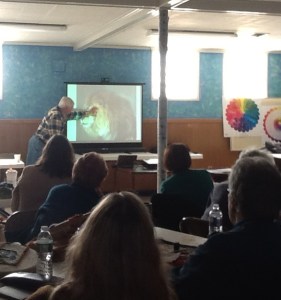 Start by being aware of the light source direction as that provides your shadows. Shadows go from darker color to lighter to provide depth.
Fur:
- When h
 ooking fur think about direction fur going on the animal you are hooking. Hook in that direction. Our eyes pick up ditches in the hooking. Hook in the direction that you would pet that animal body part.
 - Colors provide depth seen in the image. Example: A black panther needs purples/blues/grays for shadows. Whites need grays also pinks, purples.
- The natural length of fur affects the length of your hooking line.
- Fur/hair does not grow in straight lines. Hook fur with curves and not exactly side by side, vary the direction for a realistic appearance.
Feathers:
- Watch out when hooking feathers, so they do not end up having a too symmetrical appearance. Feathers do not grow that way. To hook for a natural appearance you need asymmetry in width and length. Vary the shape of the tips. Feather tips are different shapes depending on where they are located on the body. Hook the feather tips first and then fill in. Check for quill lines, if you can see them, then you need to hook the quill lines in.
- When feathers are dark use light for tips to help create the natural appearance/illusion of feathers covering the body in the finished piece.
- Many common backyard birds have areas of solid color that need to be hooked with a solid color.
Eyes:
- With faces as a main image in the design there will be a focus on eyes.
 In cats eyes when the light shines on them the pupil constricts to a vertical streak/line.
- With sheep it is a horizontal streak. With dogs and humans the pupil is circular.
- The wrinkles around an eye actually support the eye.
- When there is fur, the eyes will have a dark streak coming from the inside corner of the eye.
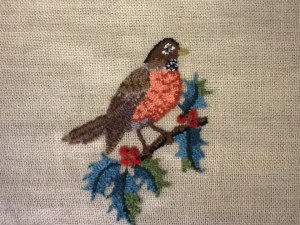
 Not all eyes will be whole. It will depend on the head position and direction the creature is looking. It will also matter on where the eyes are naturally set on the head – front or side – prey will be on the side (squirrel).
- Eyes are flatter top and rounder on the bottom on mammals.
- Reptile and bird eyes are very round, as there is no eyelid that drops on top.
- When hooking an animal getting the eyes, then nose/mouth right really makes the image. Since this is true its best to hook these features first. Hook around them some before make a final decision on reverse hooking or leaving as is.

General Hooking Tips:
- Moths do not eat clean wool. They eat for the food and oils that are impregnated into wool. Freeze recycling wool for 2 days to freeze moth eggs, then bring in and wash.
- Pattern lines are the outside edge of a feature, so hook inside not on the line.
- How long a cut worm of wool is needed to hook a run?
- #4 needs 4x length of the run
- #5/6 needs 6x
- #8 needs 8x
- Loops for 6 and 8 have higher finished loop so more fabric needed.


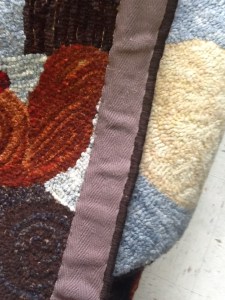
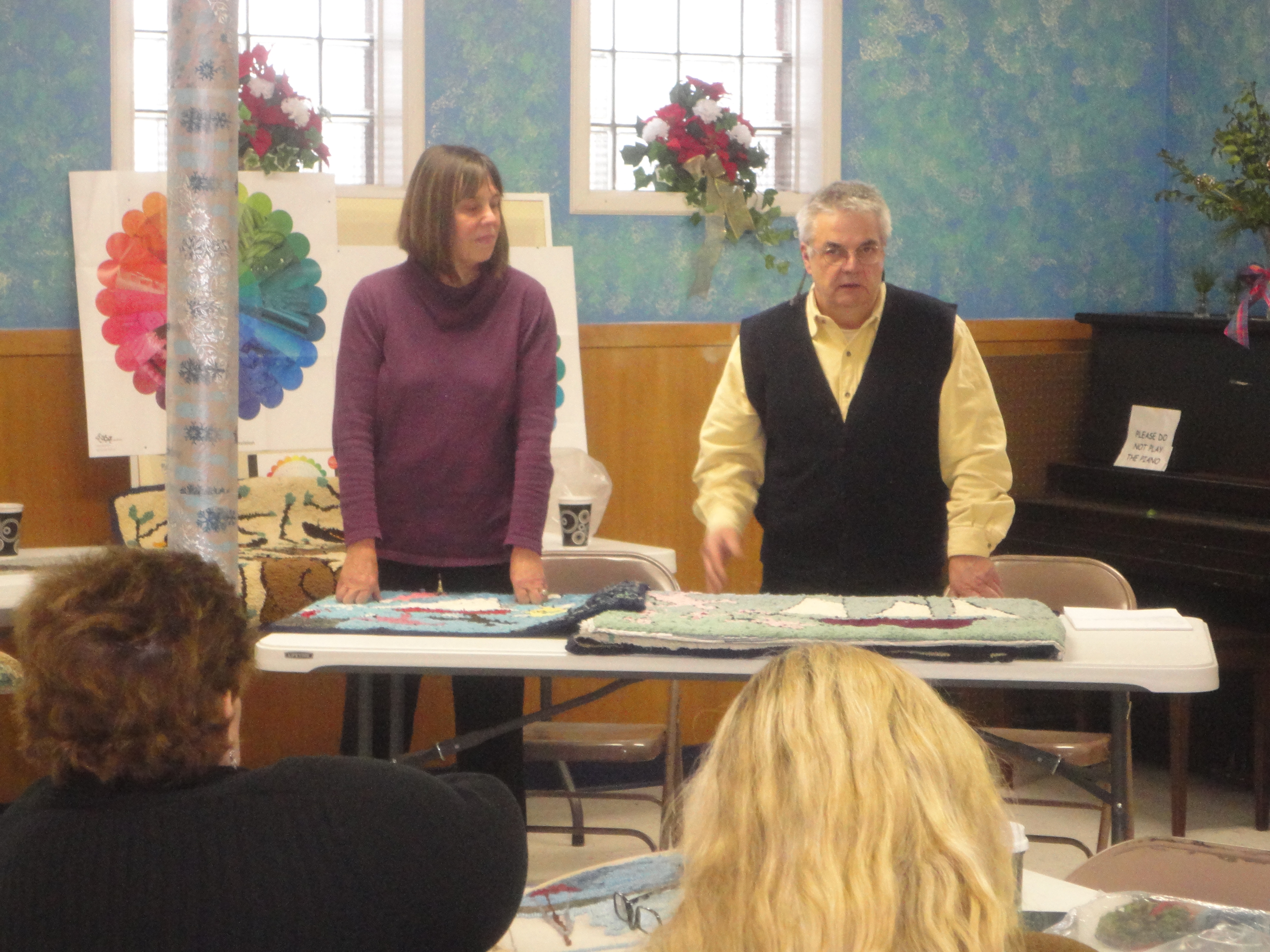
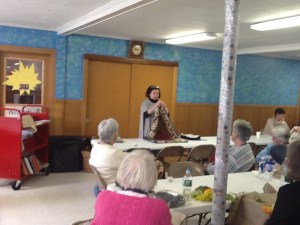 Beverly joined us in April 2014 to demonstrate different finishing techniques that she has used over the years to finish hooked pieces.
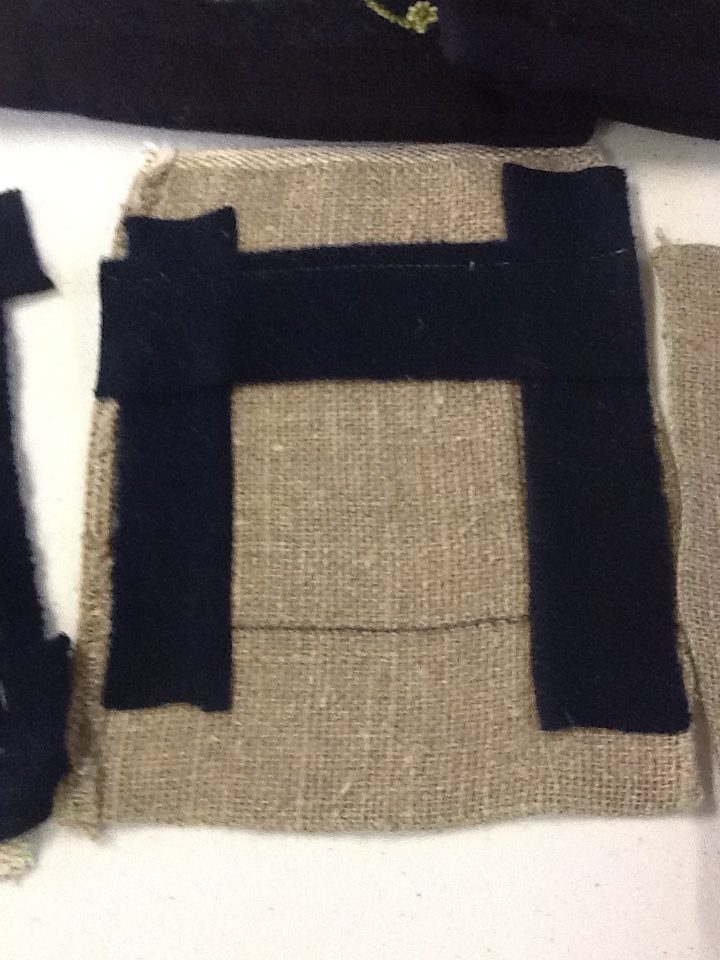
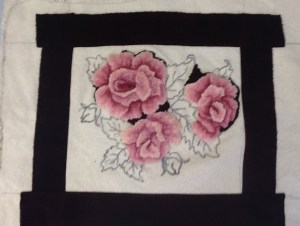 using a binding start by pre-sewing the binding at what will be the finished edged of your hooked piece. This allows you to hook right up to the binding.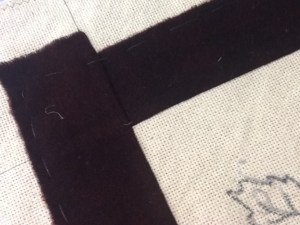
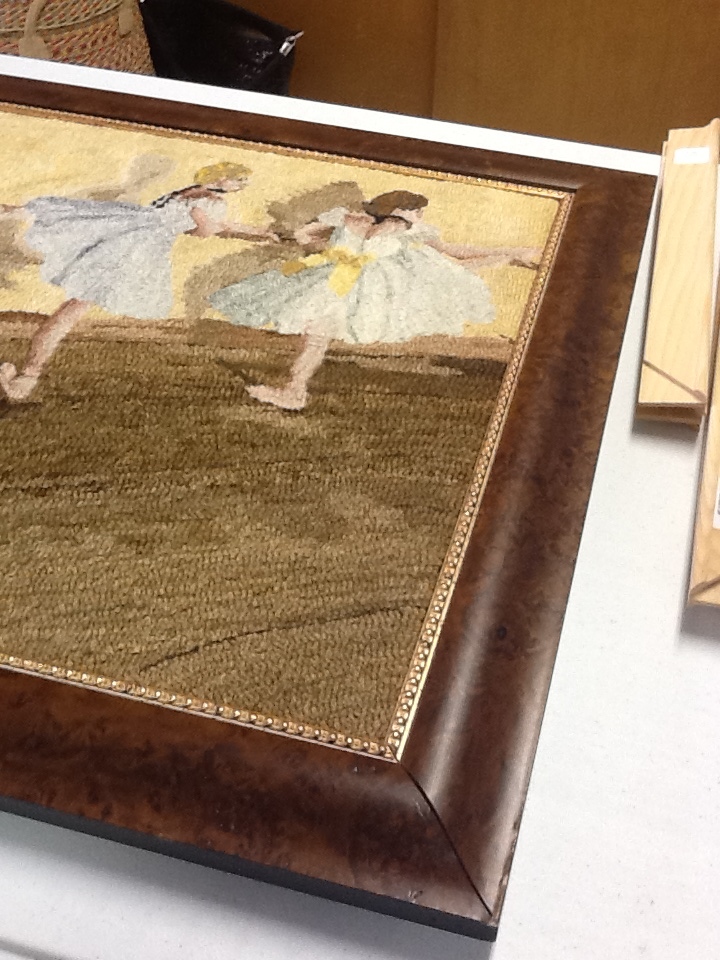
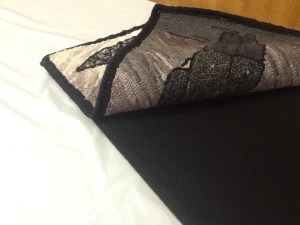 Start by taking your finished rug to the store with you to get the correct sized frame pieces.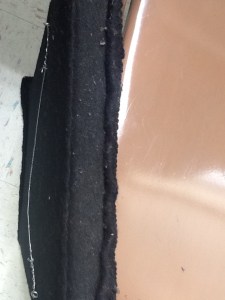
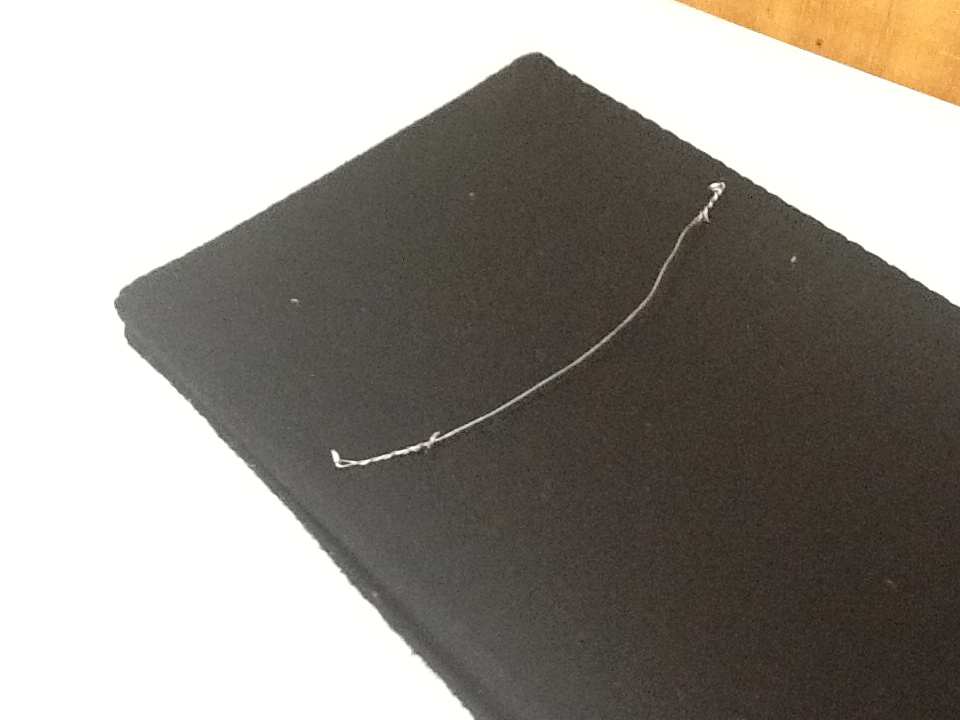
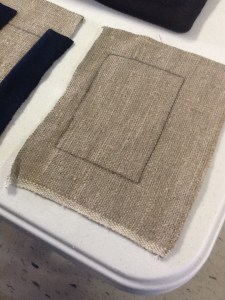 For a pillow with a wool border get it in place before you start hooking the pillow top.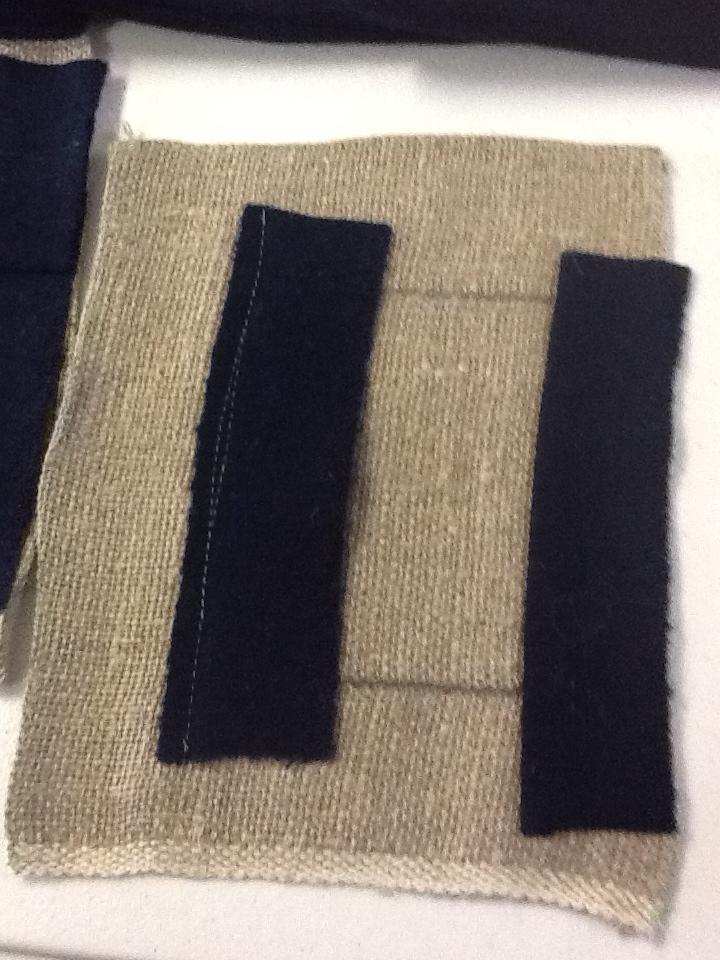
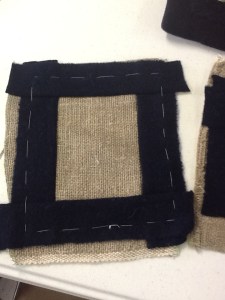

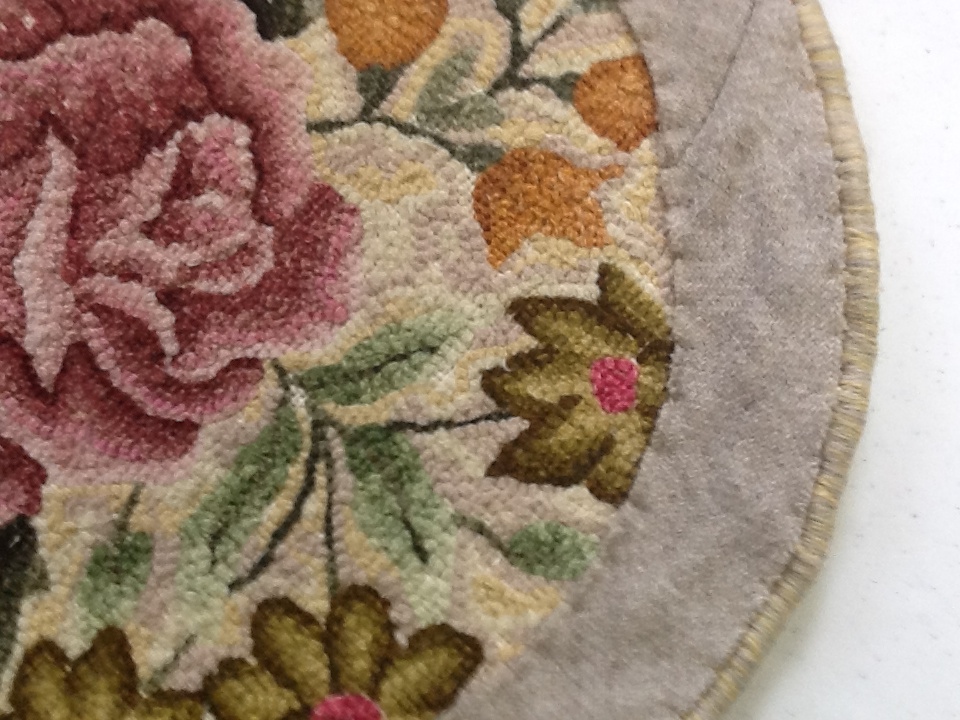
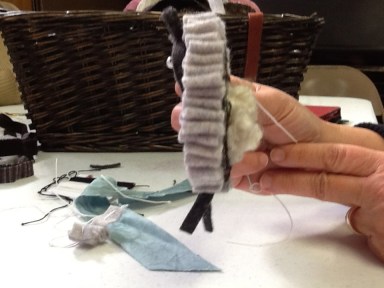
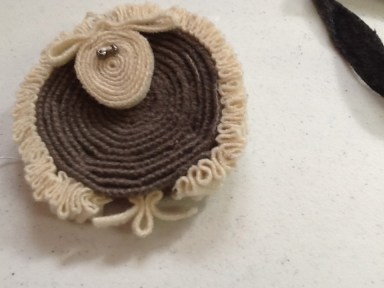
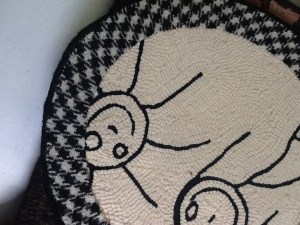 Finishing round pieces has different issues.
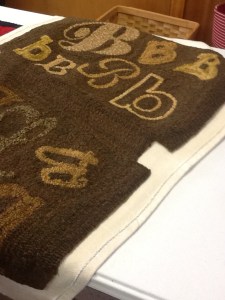 This unfinished Tote bag. The foundation has a sown edge and will be sown together to form the purse/tote. There is no binding.
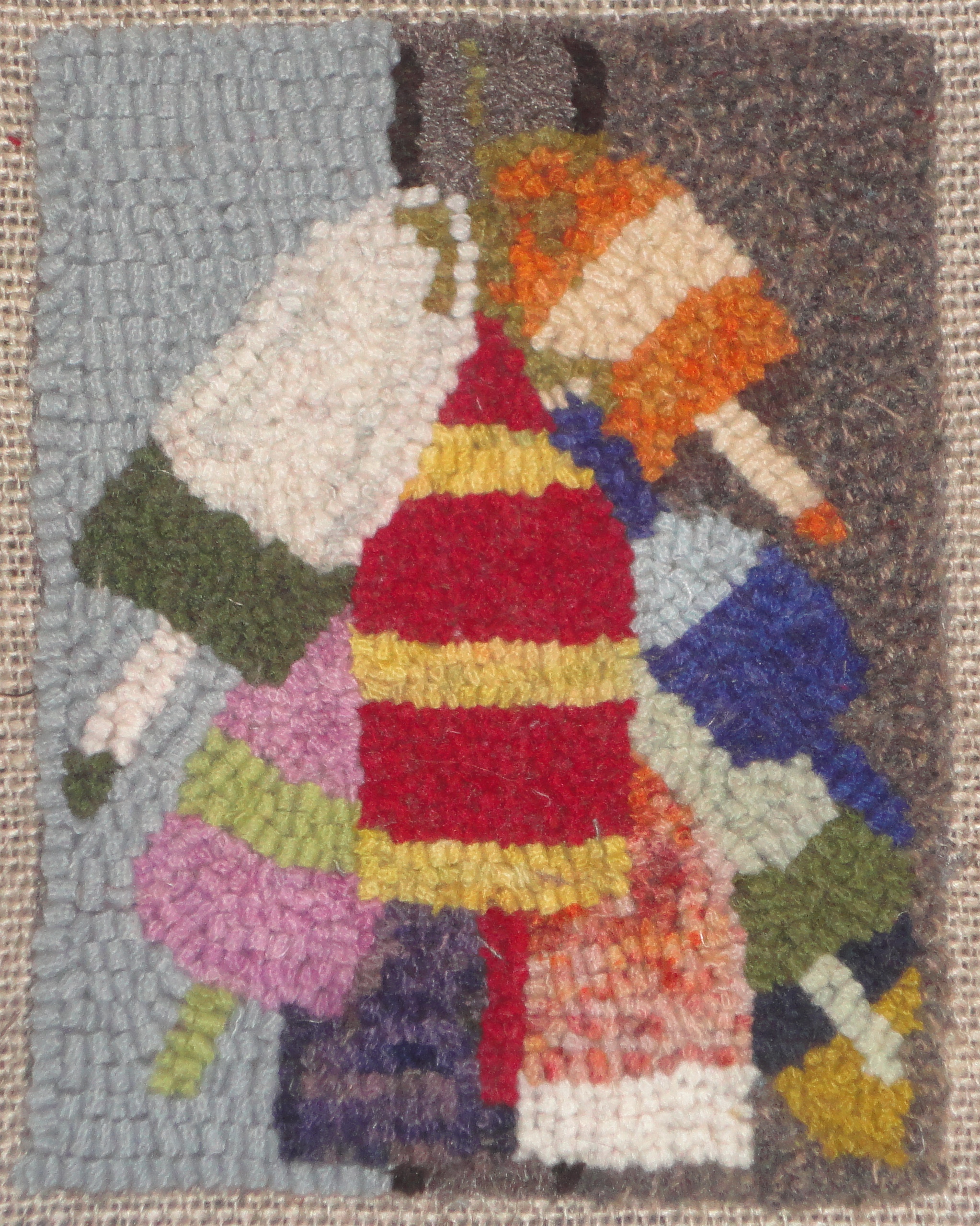
 If you look close enough you can see the red shaker markings. A few black diagonal lines. But finally some extra buoys set under the already hooked ones to work as most of the background. I’d figure out how to complete the background once the buoys were all hooked.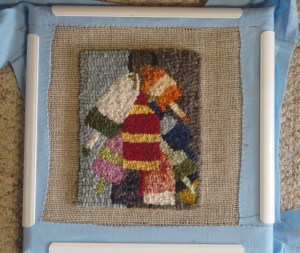
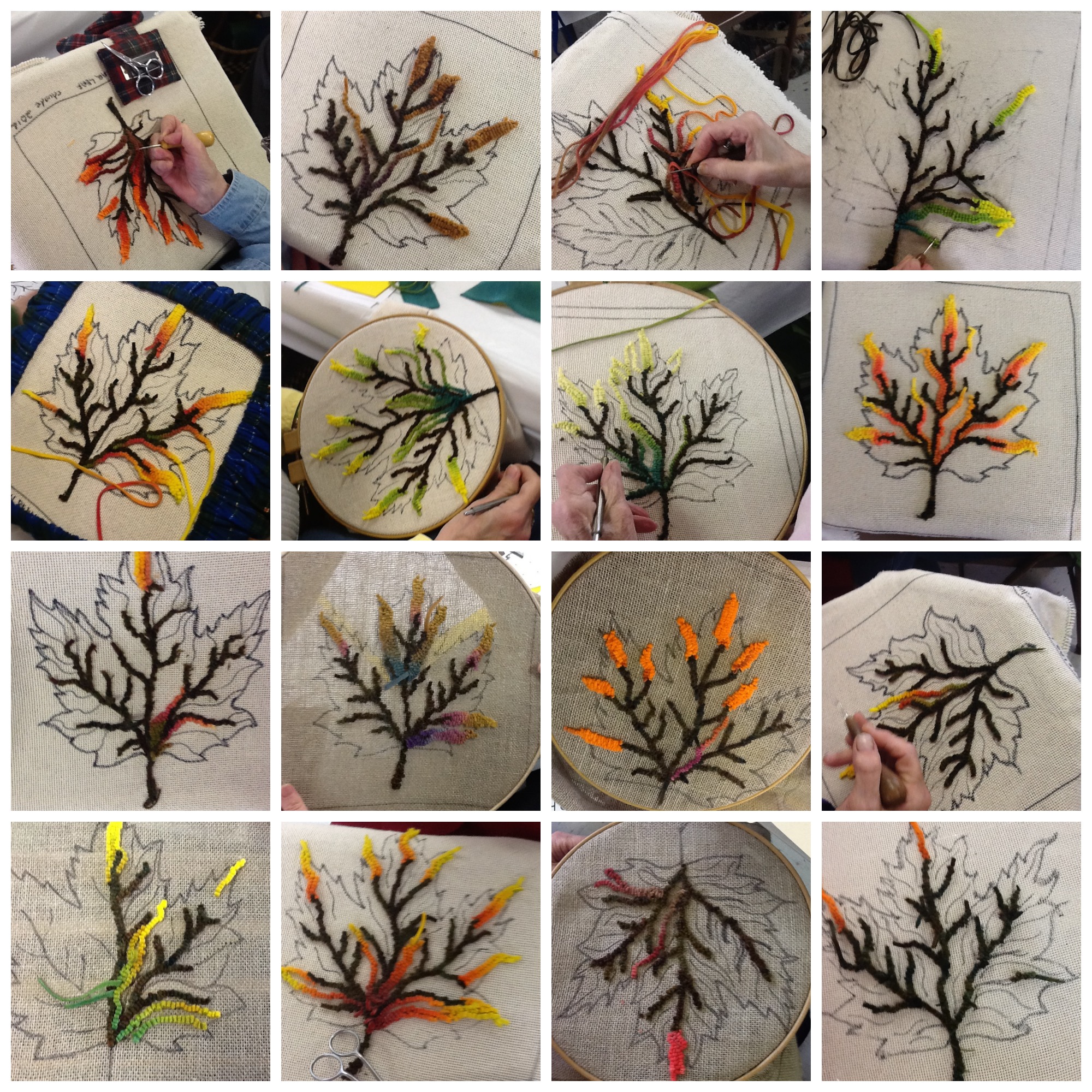
 It was a wonderful workshop with clear information, helpful tips and a teacher willing to help and allow time for members to work each step. Members were definitely busy hooking away. We seemed to have a much larger group still hooking after the noon pot luck than usual.
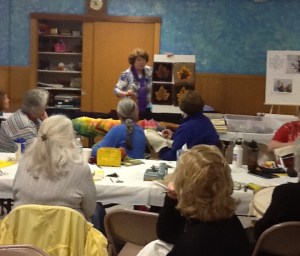
 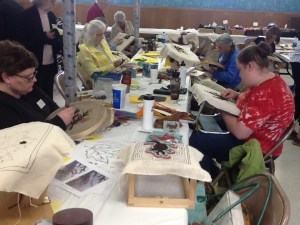 (just one of 3 table areas)
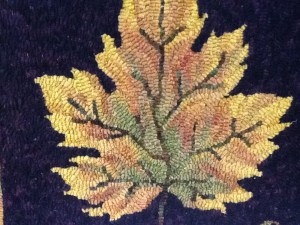
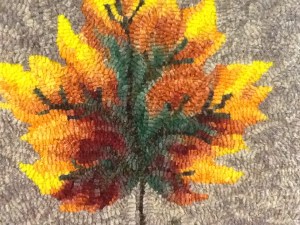
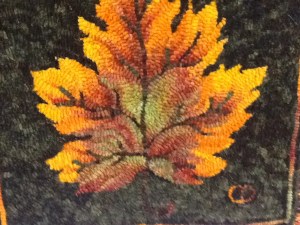
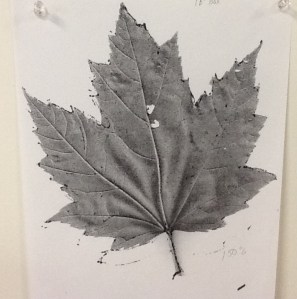 Using a real leaf, Cindy designed a special leaf pattern for use at this workshop. The pattern was copied onto foundation of choice. Red dot is great for that.
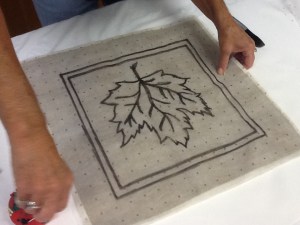 These who participated in the workshop got an informational folder with such items as the pattern and photos showing progression/steps
 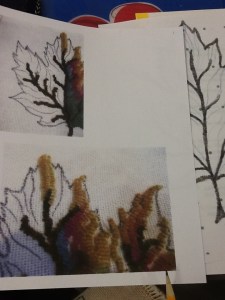 and casserole dyed wool.
  It was fun to see what members chose for their pieces. Wool was cut #4
 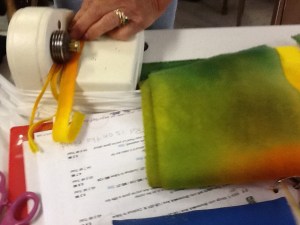 , then carefully placed in order. Tip: use folder with masking tape to maintain the cutting order.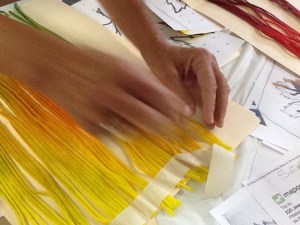
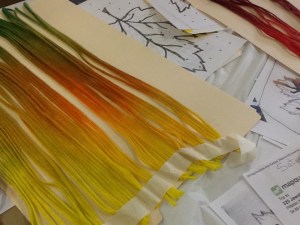 Tape over ends or loop the tape so a sticky side is up to just lay cut strips on.
 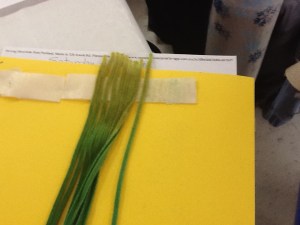 One side can be used to organize the cut off pieces.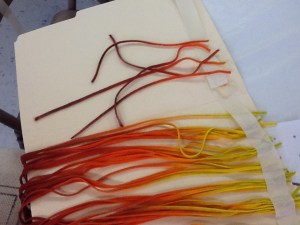
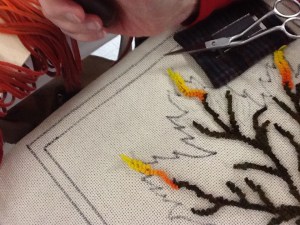 Once have these main points hooked in, time to start work on center. First draw in additional curve lines into design for guidance. Start at base (vein) with opposite color end than points (dark here since points light) and hook the strip out.
 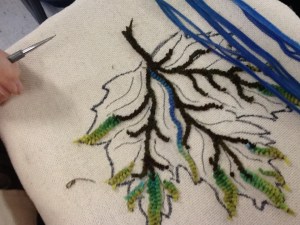 (Can see the dark blue in the center along vein. Hooked all the way to a minor point.)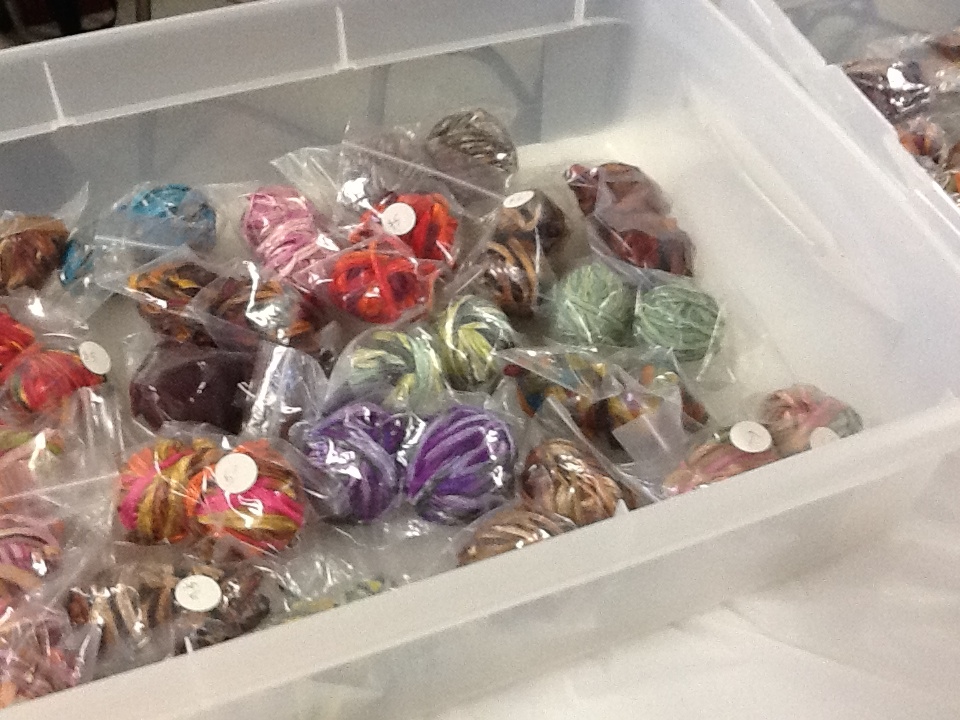
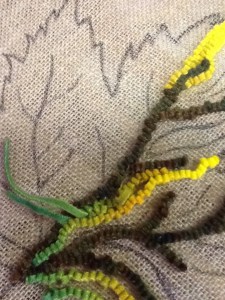 (I would also be checking those cut off sections to match up colors, as I’m a use every piece type of rug hooker.)
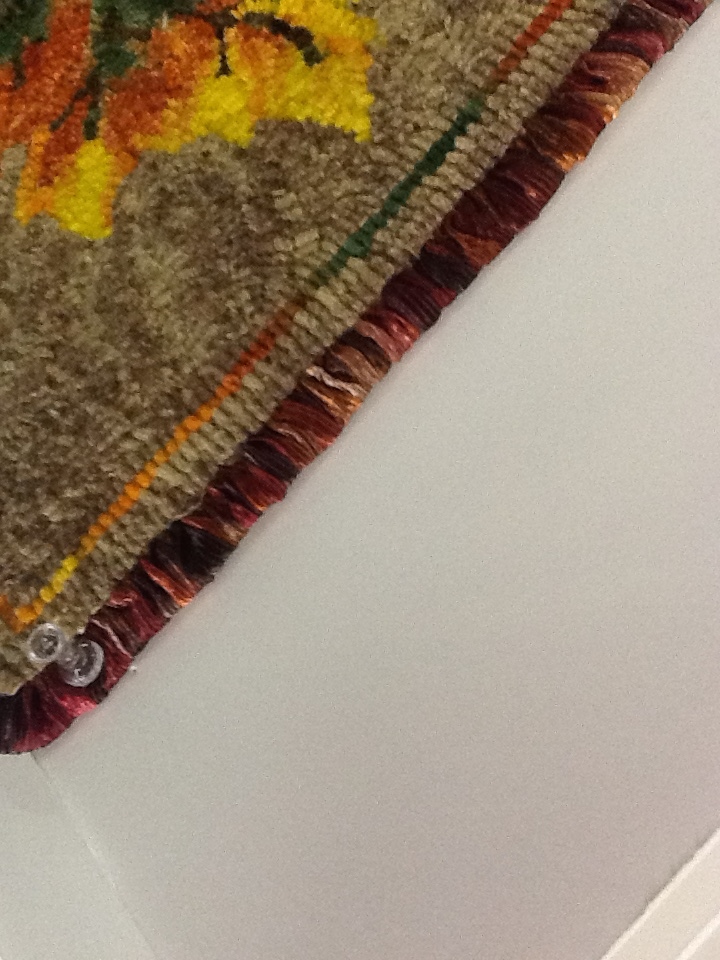
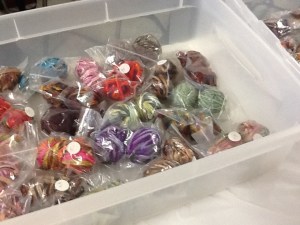 Tip: to sample the look the ribbon will give once whipped, wrap some around a pencil and check against your background fabric.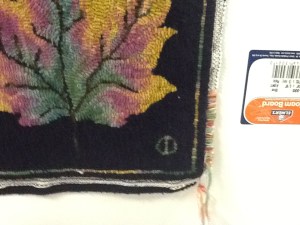



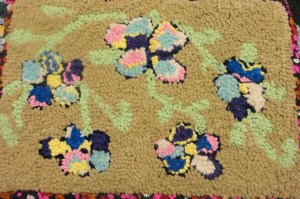


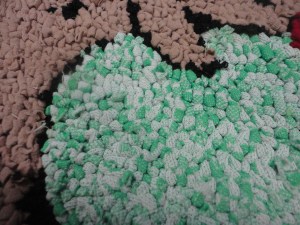
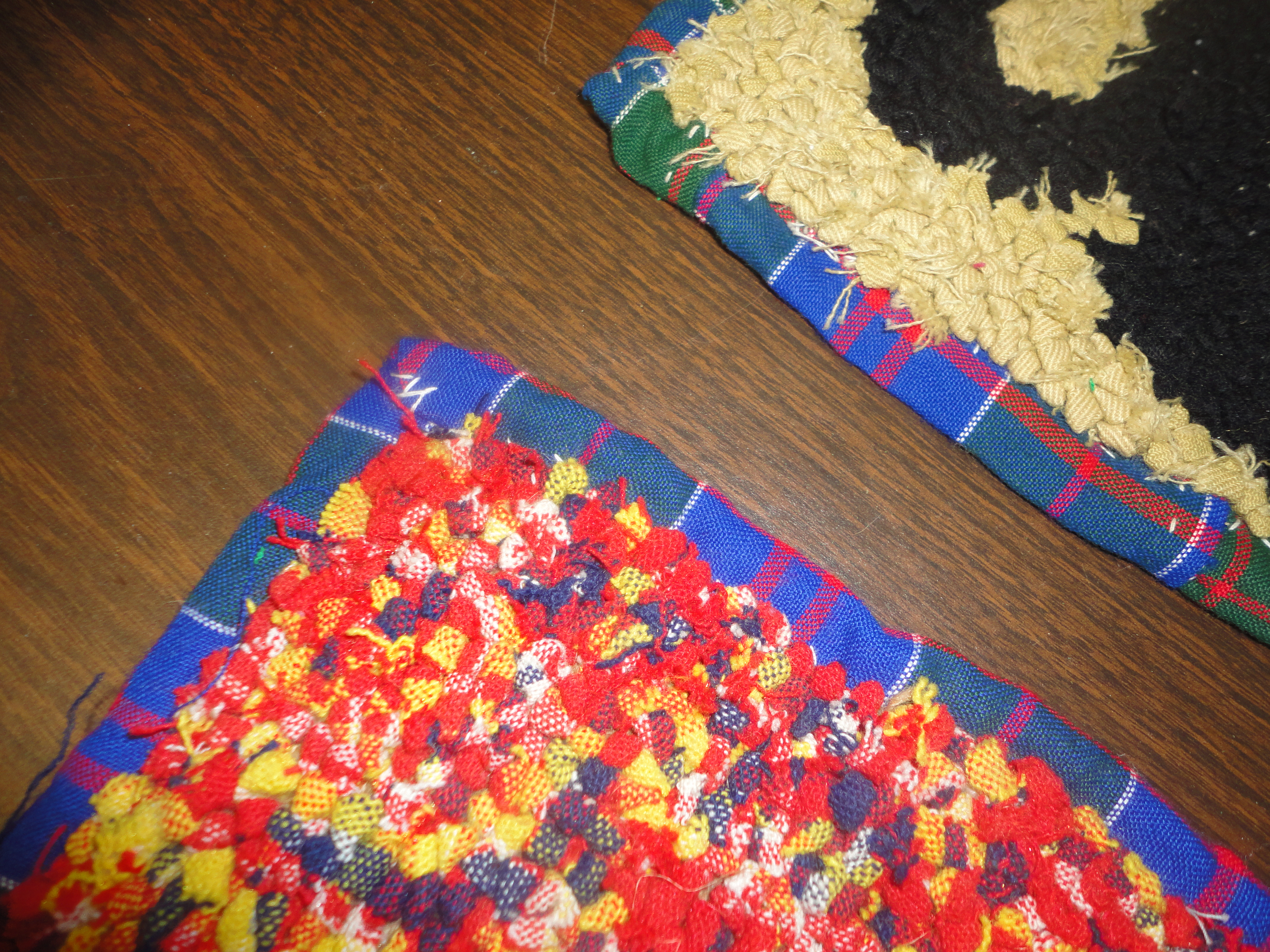
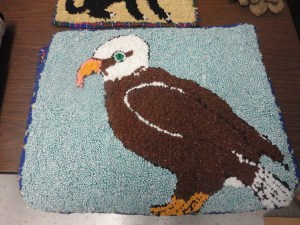
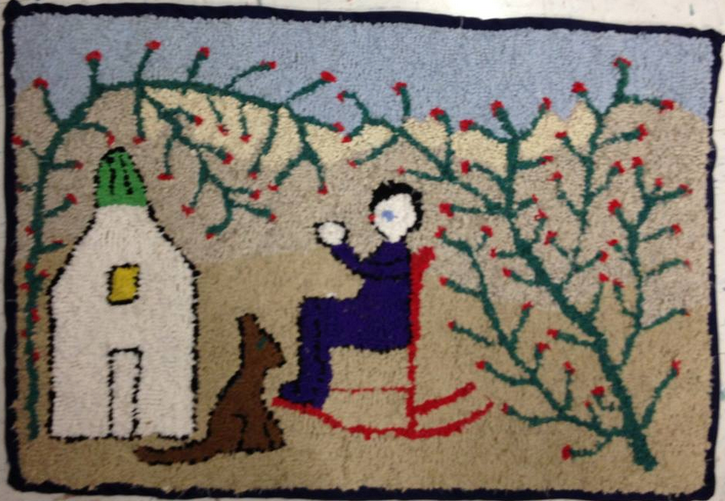
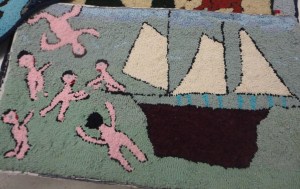
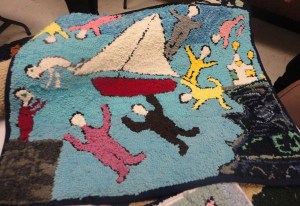
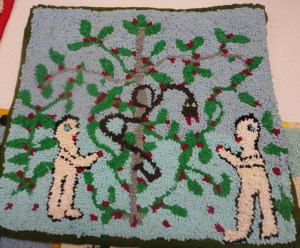
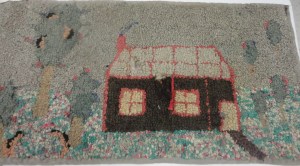 John recalls this rug as being inside the door of Ellen’s home. The family used their rugs throughout the house, but also hooked over the winters to have rugs to trade for linoleum mats/rugs. Interesting how they saw more value in the linoleum than their hand-made pieces.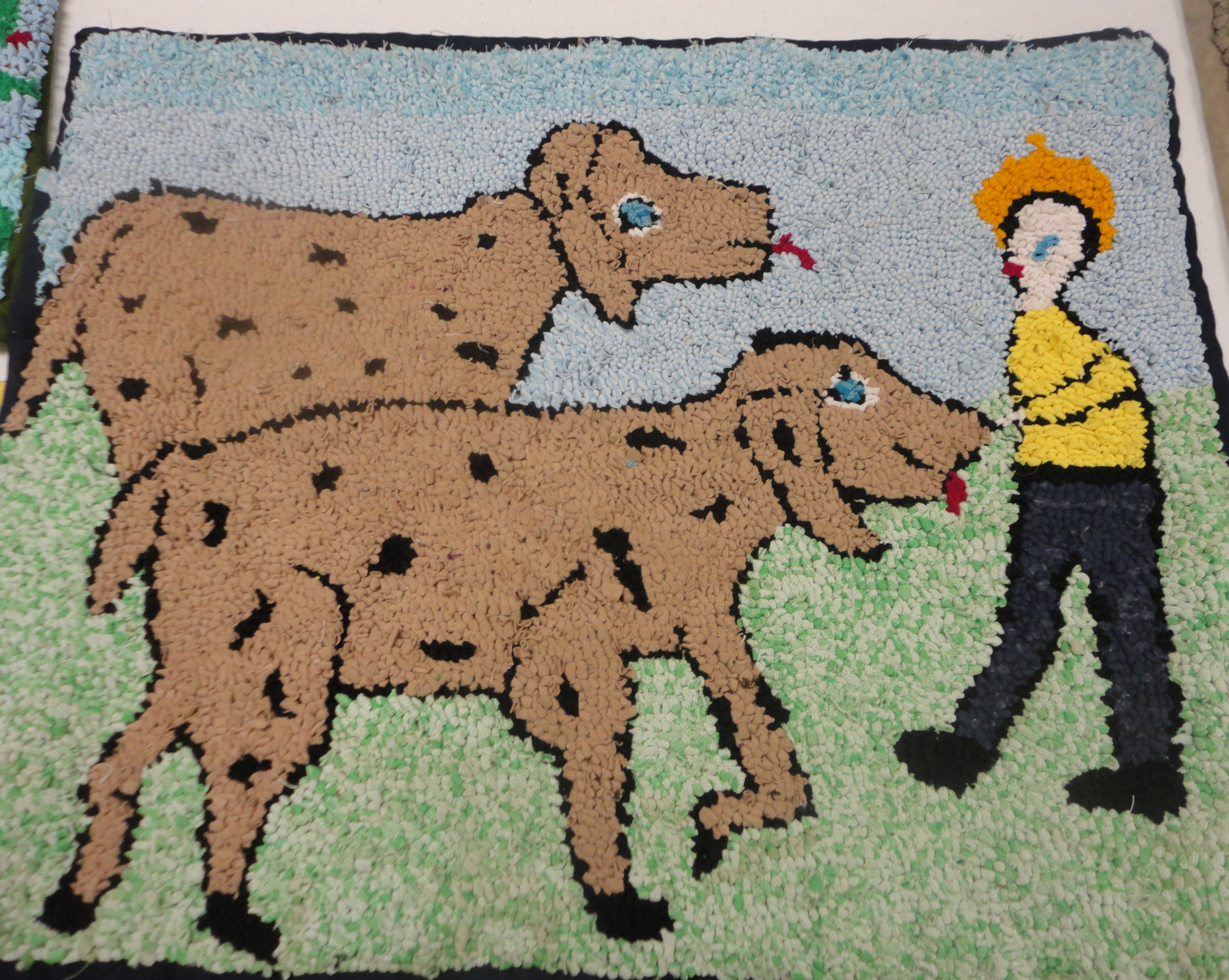
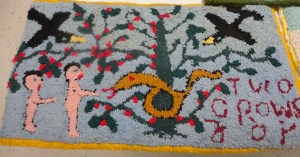
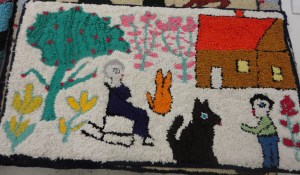
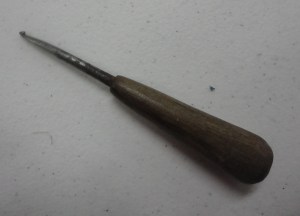 I got to try one of her hooks with aged metal shaft and well-worn wooden handle. Hooking a #8 strip it worked just fine. Ellen also knit (find some gloves knit for John in a photo above – clue look for the cat and eagle). In talking with John afterwards about Ellen’s creativity he told me she had crocheted her own wedding gown. She truly sounded like an interesting and many talented lady.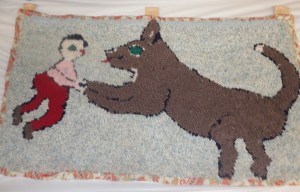



 Mouths often have a white part to them.
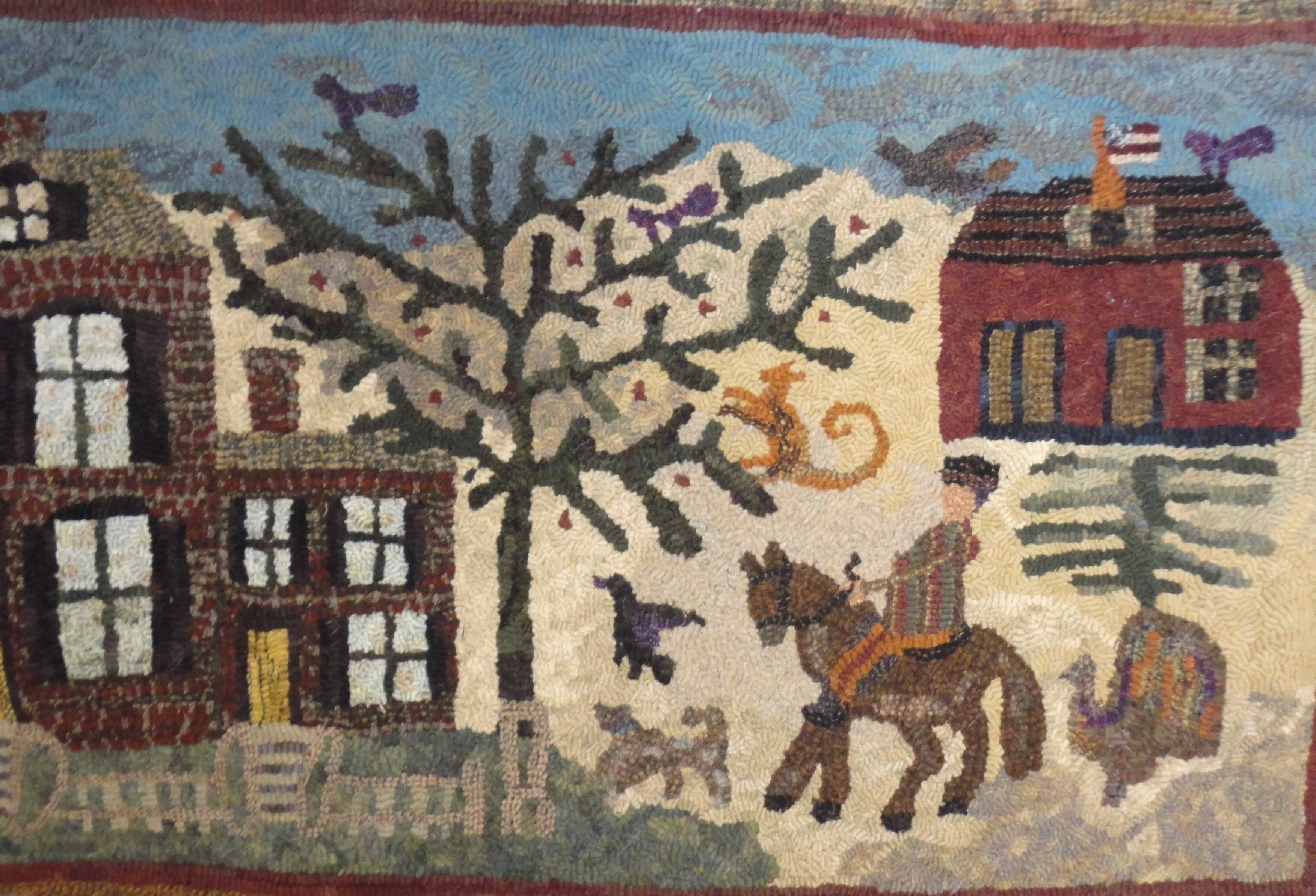
 Tin Pedlar of Maine